After graduating in 1964 I headed to Hollywood to be a movie star, only to drop into the '60s. Lucky me!
After hitch hiking around the country from '69 to '72, I graduated from Boise State University and settled into waiting tables for a living and pursuing other interests—teaching stained glass at BSU, writing for Boise Weekly and Idaho Magazine, publishing some Idaho and Biblical history, acting in a few local shows, and traveling at the drop of a map.
For two years I produced a half-hour public access TV show available at www.greatwahoo.com. In 2011 I was featured in Scott Pasfield's book Gay In America.
Through it all I've come up with some stories and am using this blog as an excuse to get them written down.
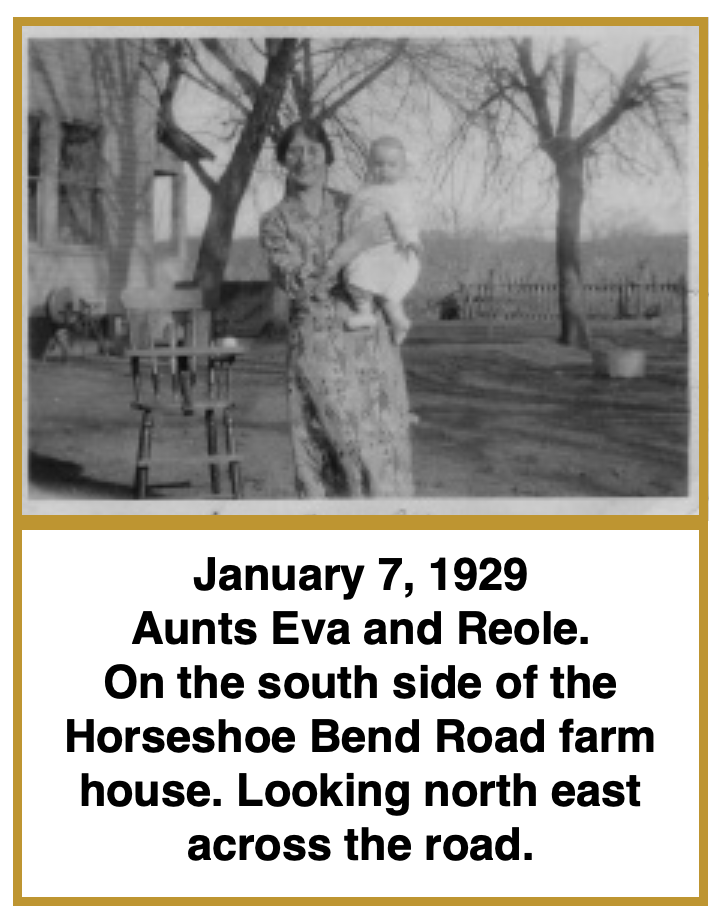
My dad’s plan on marrying my mother was the same it had been with his first wife — to move in with his folks at the farmhouse out on Horseshoe Bend Road.
It was a large two-level house with the latest in modern counter-balanced windows that offered good circulation in the summer months. It also featured an outhouse, chicken coop, hay barn and milking shed, all of which guaranteed a rich “bouquet” that permeated the entire premises. In that department I’m sure it was no different than any barnyard.
Years later my mother assured me she was having nothing to do with that plan: “He was not moveing me into that smelly old house to take care of his mother and aging brother and sister.”
And he didn’t!
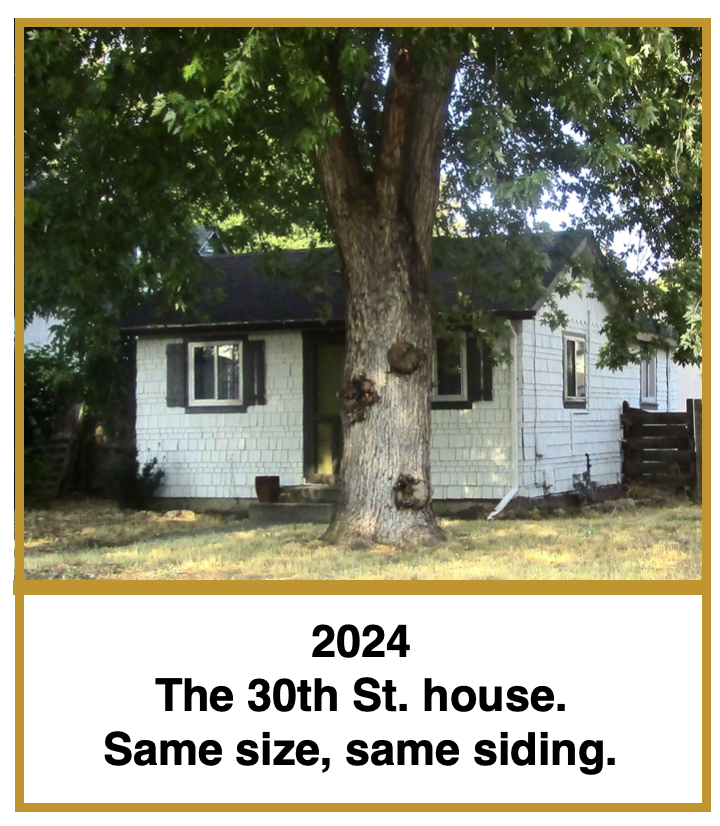
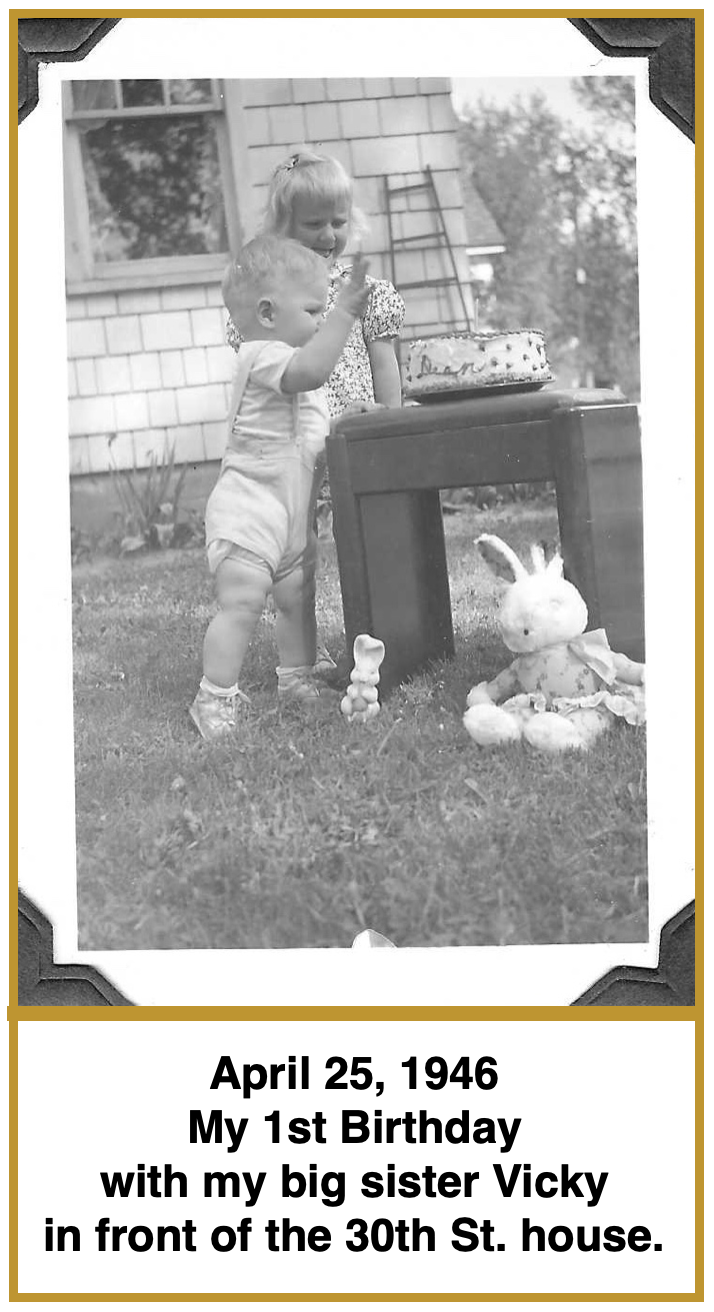
Instead they rented a small place in Boise until they bought a single lot on 30th Street. It was and remains at one block north of Lowell Grade School’s baseball backstop.
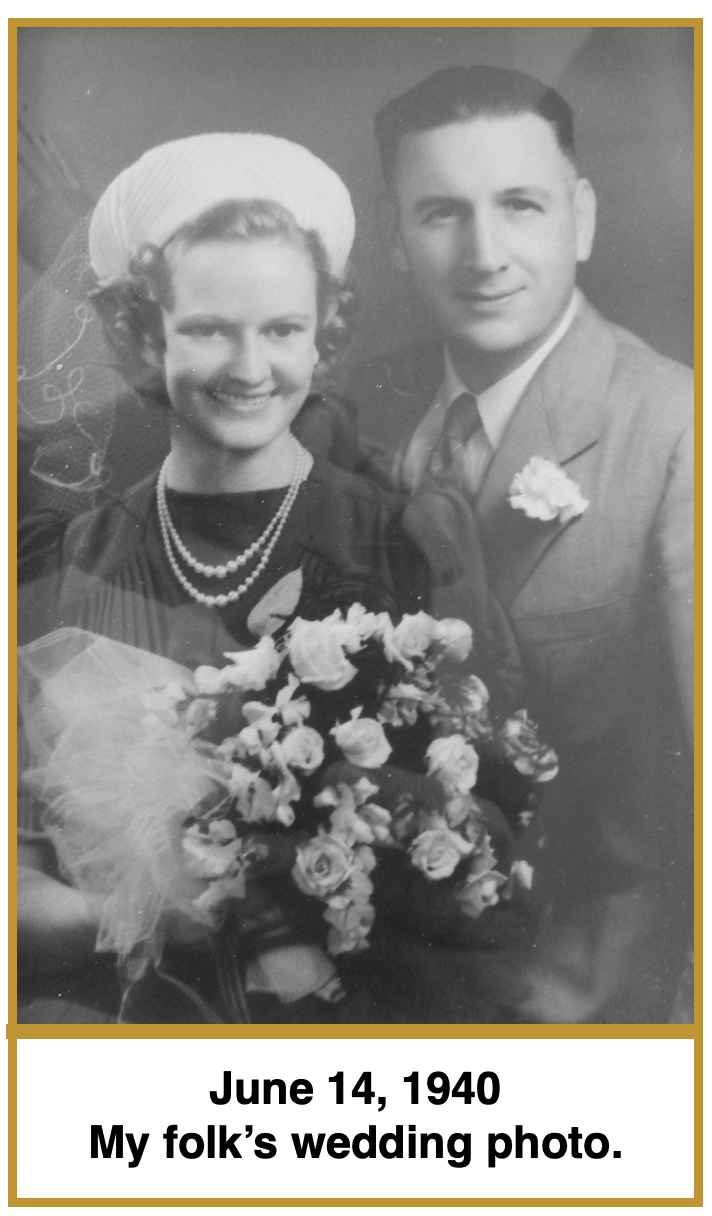
Soon they were building a small one-bedroom house. Three years after their wedding on June 14, 1940, my older sister joined the few pieces of furniture that were crowding that space. I joined them two years after that.
My dad was born in November of 1903. Fourteen yeas later, in March of 1917, my mother was born.
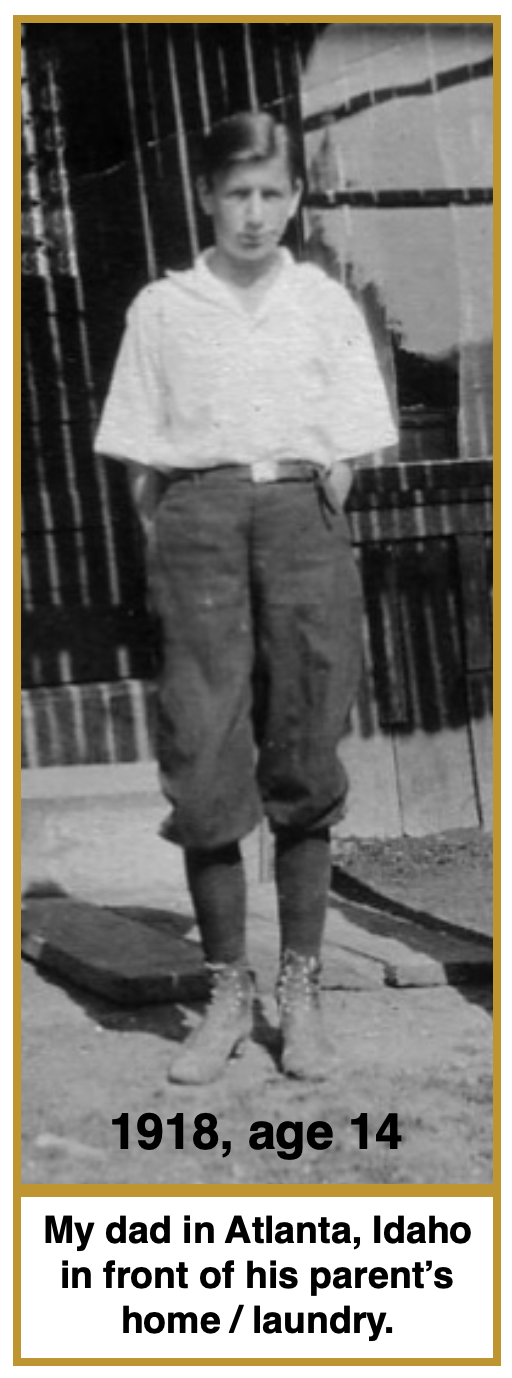
Dad spent his early teens in Atlanta, Idaho, an isolated mountain mining town. He chopped wood and carried water to keep his family’s laundry with the scalding water his mother needed to get the grime of the miner’s clothes. And he picked up a life-long love of music from a young schoolmarm he appreciated for the rest of his life. The family moved to what is now Old Horseshoe Bend Road, one lot south of Hill Road, when he was fourteen.
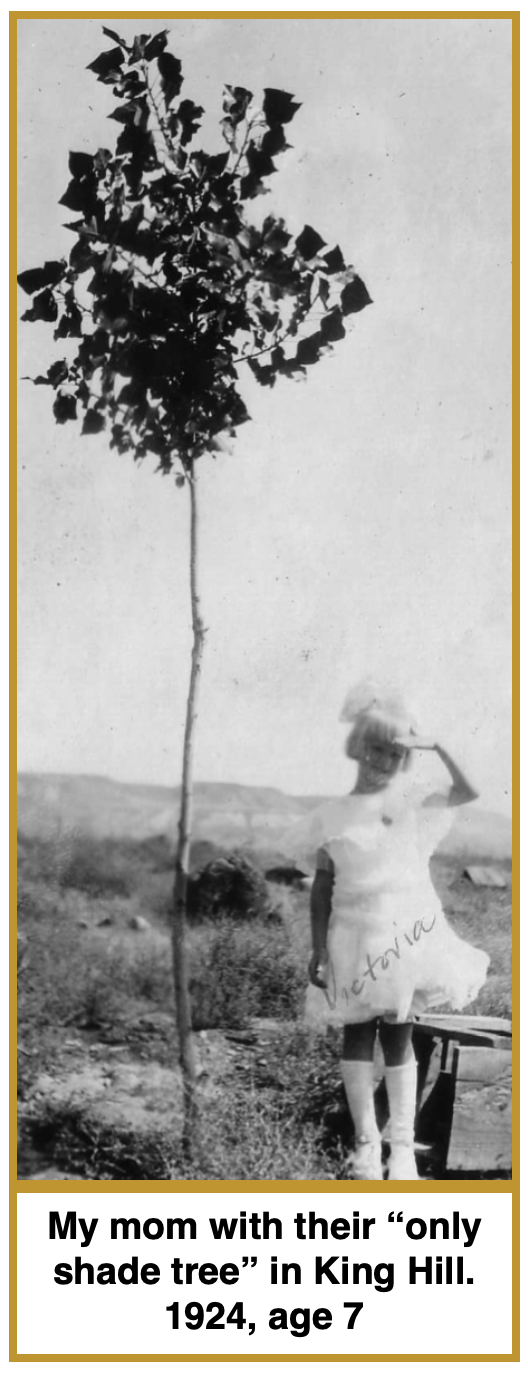
Mother’a early school years were spent in the isolation of Idaho’s central desert on the last farm irrigated by the King Hill canal. Thanks to wooden flues that burned whenever a brush fire swept through the sagebrush the irrigation water was unreliable. Combined with potatoes that had not yet been bread for the summer heat and the never-ending stones coming up in the fields, the family lost the farm and moved to Boise when she was thirteen.
Dad’s mother was a Bible-banging Christian who insisted he go to a Nazarene high school in Nampa. He commuted on the electric Interurban Rail Way for a few days before he came home and declared if he had to keep doing all that praying he wasn’t going to go to school at all. She relented and he got on the Interurban going the other way to Boise High. Because the family had moved so much in his childhood, dad graduated from Boise High twelve years before mother did, at age twenty.
Dad’s mother used her religion to keep two of her five children home so they would be there in her old age. Dad became resentful of this manipulation and, later, of how religion kept his sister impoverished with worries of damnation for the rest of her life. Long before I arrived my father had given up on religious institutions.
My mom was raised a believing Lutheran but not holier-than-anyone. She took we three kids to church while dad was glad to stay home and enjoy the Sunday peace and quiet.
While my mother was getting through twelve years of school my dad got married and — gasp, — divorced. He also played trombone in a band in bars, smoked cigarettes, and was apparently a rather randy young man about town.
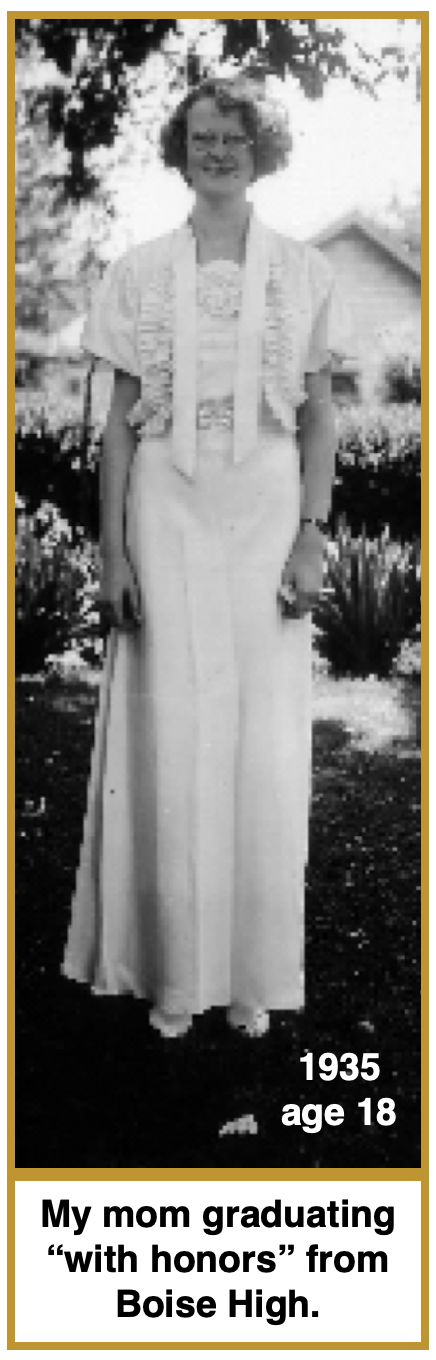
From Boise High my mother graduated into the Great Depression. With her father very ill and unable to work she went to work as a secretary to support the family. She also made sure her younger sisters had the prom dresses and year books that make teen years memorable and which she had missed out on.
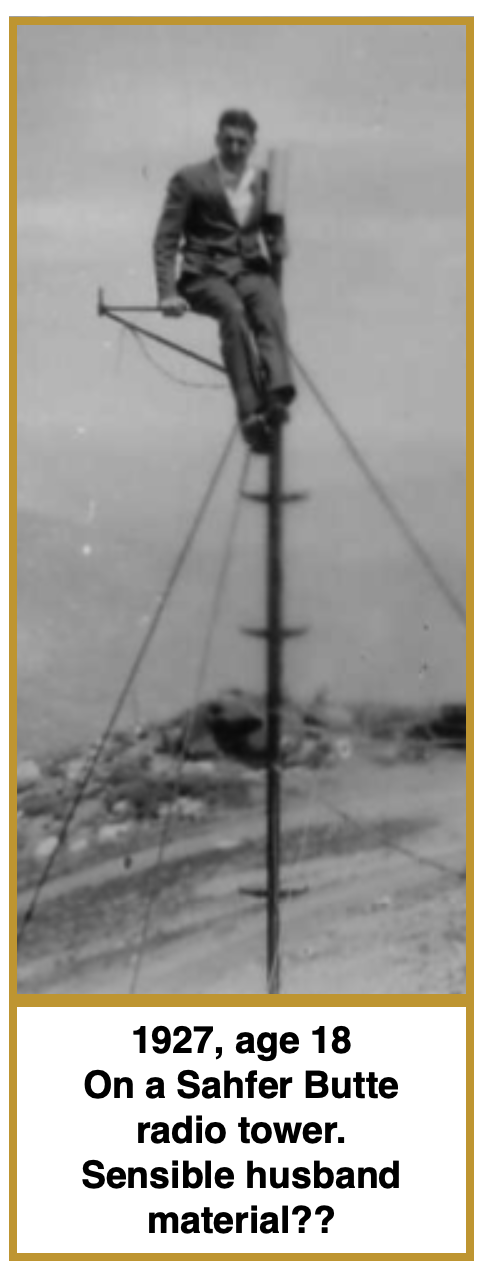
In early 1938 the Boise Light Opera company staged a production of Gilbert & Sullivan’s grand romp The Macado. Both my parents got singing parts and were soon dating — she, the hard working young lady from a good home and he the free-ranging older man it took to charm her with a different life. They married in 1940.
My mom’s folks fretted over the history of divorce, drinking, smoking and trombone playing. Dad’s mom squirmed over his marrying outside the Only True Religion. There is no doubt the old folks were talking.
Indeed, when my dad died in 1977 my mother’s mother was still alive. Grandma had never driven so I picked her up and took her to dinner at my mother’s house. Afterward, when we got in the car to take Grandmother home, she immediately folded her hands in her lap, gave a resolved sigh, and observed, “Well. That marriage didn’t last long.”
“No, Grandmother,” I replied. “Only until death did them part after thirty-seven years.”
I don’t remember the day, but my Mother sure did. April 25, 1945. Five days before Hitler murdered his newly married bride and then shot himself. At 6:25 in the morning, despite Mom’s hard work and interminable efforts, my fat head just would not get beyond crowning.
Finally the doctors decided to take drastic measures by placing a contraption with three suction cups on what was showing of my head and yanking all 9 pounds and 5 ounces of me from her body.
Babies skulls are soft, an essential part of our getting through the birth channel. It is why the three suction cups that pulled me out left three very prominent black and blue lumps crowning the fat glory of me.
Somehow, after all that, my beautiful mother generously still loved me!
Years later Mom told me how excited Dad had been, running along the line of new dads looking through a viewing glass to see their newborns for the first time. Cigars were passed out and lit up as he made sure everyone looked where he was pointing while he exclaimed: “That’s my boy! That’s my boy!”
It was then Mom looked at me and confided, “But Dean — you were the UGLIEST baby I had ever seen!”
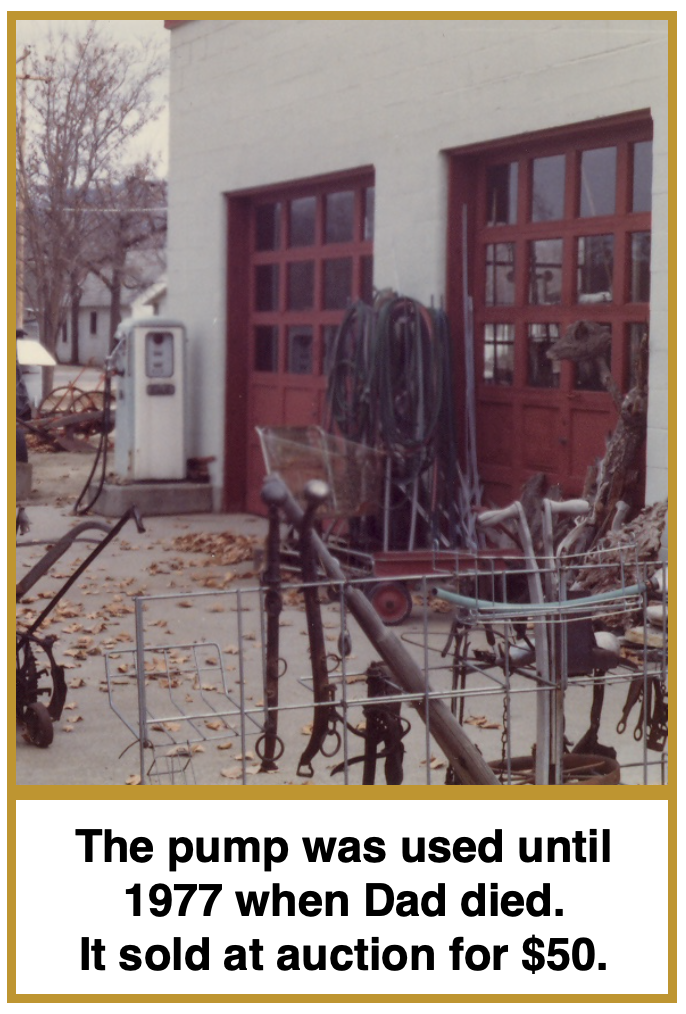
Since we rented tractors by the gallons of gas the customer used my dad decided he needed an actual gas pump to do the measuring. This was when I was six or so and I have no idea how gasoline was measured before dad found a used pump and went about installing it.
Acquiring the pump and getting it installed happened when my mother took my two sisters and I to see Aunt Carol in her new place on a farm outside of Hillsboro, Oregon. Being 1953, US Highway 30 was a miracle of modern Federal construction — two full lanes wide, paved, with no railroad crossings, and the same signage from coast to coast to guide our way. Yes, there were local speed limits through every town and lines of cars behind every truck struggling to grind its way to the top of every hill. But sometimes the highway was even three-lanes wide so cars could pass trucks on steep grades!
When we got home from Aunt Carol’s I was shocked to find a modern gas pump sitting at the end of our house. It was modern in that it ran on electricity, showed gallons pumped, the price, and it had a little twirly thing in a bulb full of gas so you knew gas was flowing to twirl the twirly.
I had no concept that you could have your own gas pump at your house. Even the idea was cool!
During our absence dad found the used pump, installed it and ran underground pipes to two above-ground tanks he had installed some twenty feet to the north.
I got real good at using that pump. First to measure how much gas our customers used (for renting tractors we charged $5 for the first gallon, $4 for the second and $3 for all after.) Later I took it for granted to keep my parent’s cars topped off before heading out on teenage adventures.
Now, six decades after returning from visiting Aunt Carol and finding a modern gas pump attached to our house, one thing still dangles in my heart about that day — scratched into the concrete anchoring the pump, was the date dad had built the pump’s foundation. And the word, “Alone.”
My mother gave me a very touching card for my 52nd birthday. She wished a happy birthday and a year full of pleasant surprises. She recalled fond memories and said I was always a joy to watch grow up. I was basking in the warmth of her when I read about one experience from 1948 —
“Of course there were times like the time you thought you were doing such a good job of filling our gas tank with water!! When you were about 3. I’ll never forget that scene of a 3 year old standing behind our car with the hose running water into the gas tank!”
Well. I ended up waiting tables for a profession. It seems I have always prided myself in being helpful.
So there I was, happy to be escaping The Way to San Jose. Settling into a respectful space between the legs of six or so other hitchhikers who had been lucky enough to scramble into the back of an empty utility van that had been daring enough to pull over for a long line of desperate hippies. Exchanging howdy-dos and where-are-ya-headings. We petted the dog someone was traveling with and listened to where the driver and his buddy were headed.
To my delight they were headed all the way to Los Angeles and, sure, they’d be glad to pull off at the Sunset Boulevard exit to drop me off. Music to the ears of any hitch hiker with a destination — a ride straight through.
But then came the two warnings.
First, they were in a hurry. And second, they had never seen Big Sur so were headed down Highway 1.
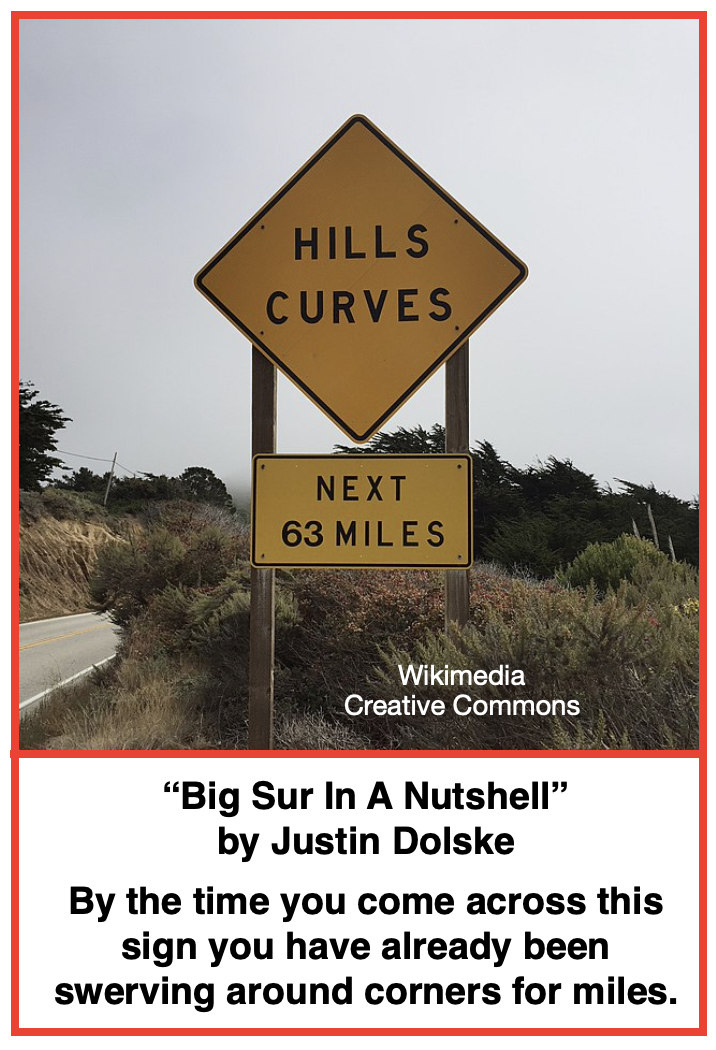
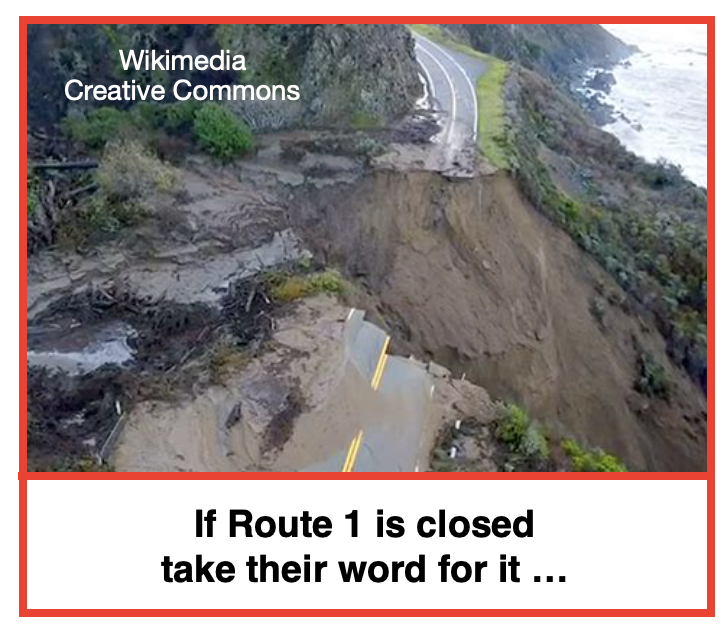
Now, folks, I —and most every other soul who has seen it — LOVE Big Sur. A dramatic coast drive, California Highway 1 hugs a steep hillside far above where the sea is pounding the Continent. Arch bridges span gulches and provide the few relatively straight or gently curved stretches as the narrow two-lane road winds its way around rocky spines spiraling up from the Pacific Ocean and forming a coastal range.
It is an enchanted drive, folks. Lit from the sun over the ocean, usually green and often sprinkled with seasonal flowers loving the constant sea breeze. Those 50 to 140 miles (depending on who is declaring what the “real” Big Sur is) are nothing less than a paradise of a drive.
A paradise, that is, if you plan on spending most of the day lingering through it. One internet reviewer suggested five hours for a “leisurely pace.”
Leisurely pacing is the only option you have in the middle of the summer season, when super-sized RVs and their sometimes timid drivers negotiate the eternal corners that do not accommodate such large vehicles. Just relax. The traffic lines can be long, there is never room to pass, and the few spots to pull over are usually ignored. Roll down the window, breath the beautiful air, and celebrate the view.
On that day’s fortunate ride on the floor of an empty utility van with other hitchhikers it was not during the summer and there was little traffic. Utility vans have no glass in the cargo area so there were no sights to see. Being cold out there was no costal air wafting through the closed front windows and being in a hurry there was no stopping beside the road to drink in the moment. We made it through in one-and-a-half hours. Tops.
An hour and a half of trying to be courteous to other passengers while desperately trying to find hand holds and foot braces to keep from being thrown around a careening metal box.
I have never been so glad to get to a relatively straight highway.
With daylight left to spare, the driver pulled off on Sunset Boulevard and dropped me off. I carried my pack west on Sunset past Vine Street and Highland Avenue and La Brea Avenue and Ralph’s grocery and the Episcopal church and pushed open the door beneath a sign proclaiming, Drossies Russian & Continental Restaurant Cafe. The hole-in-the-wall restaurant’s distinct aroma of sour cream and onions and borsht greeted me. It was the second home I had stumbled into some seven years earlier.
And that was the last step of my living on the road.
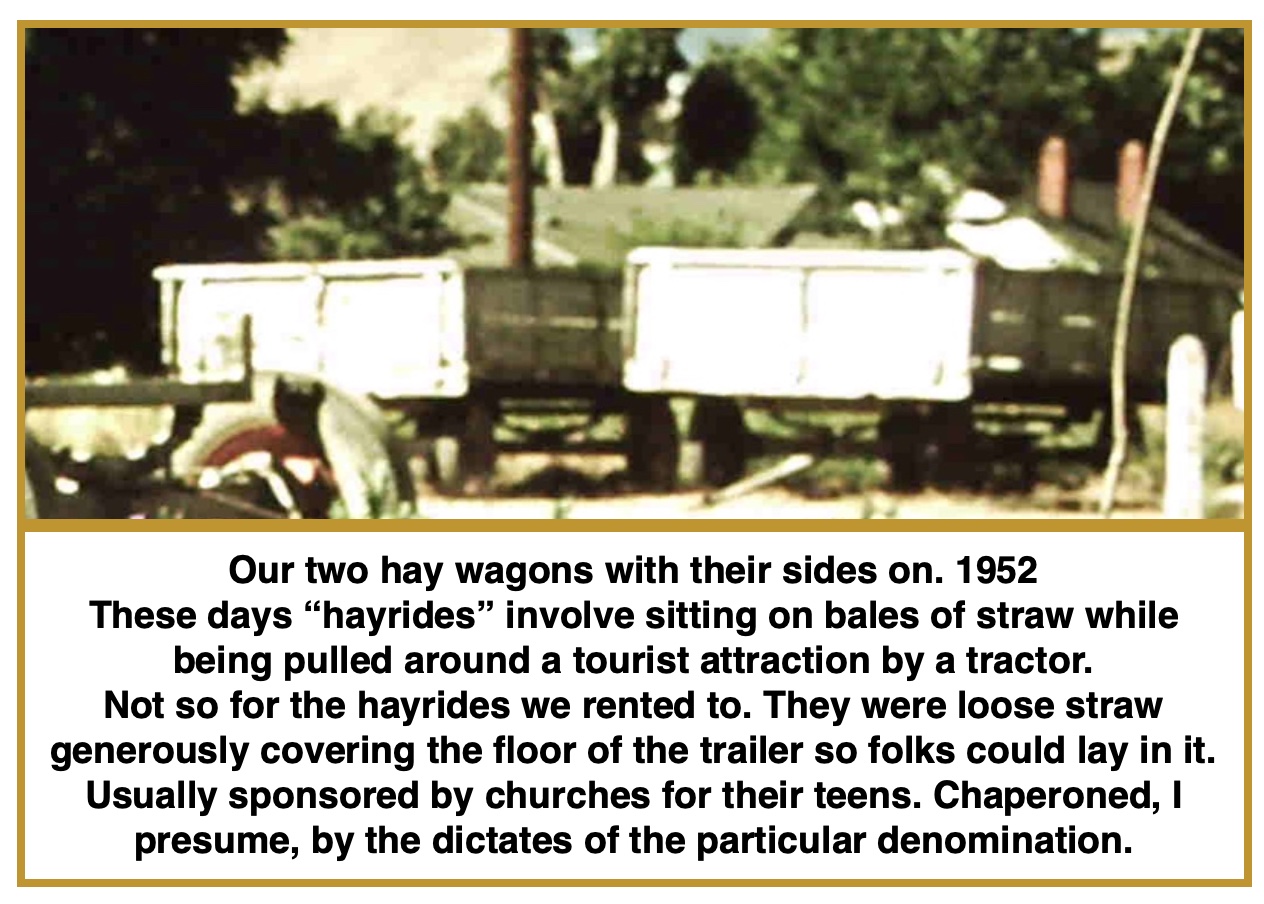
Cleaning out the hay wagons was one of the earliest chores I remember helping my older sister with. This happened after the large, four-wheeled trailers had had their wooden sides attached and had been rented out for something called a “hayride.”
Later I’d come to understand the allure of these evening rides to a country picnic and bonfire and an even later and much more quiet ride snuggled in the hay on the ride home. At the time I only knew to be careful with the pitch fork, which was longer than I was tall, while climbing over what to me were the towering sides of the trailers.
My sister made sure I would give the forkful of dry straw a good shake before tossing it over the side of the wagon. The goal was to toss the straw with enough gumption so it landed in the property’s barrow pit instead of right next to the trailer.
Dad, and later we kids, would always push the wagon next to a borrow pit before cleaning it out. Later, when conditions were right, Dad would burn the straw, cleaned the pit while ridding ourselves of the leftovers of satisfied customers.
And just why had my sister made sure I gave the pitchfork full of straw a good shake before tossing it over the side of the trailer? Now that you’ve asked, I’ll tell you the anticipated joy we kids felt when someone had rented the trailer for a “hayride.”
It seems there were folks on those hayrides who did not pay attention to what was in their pockets. As I said, I would eventually learn about those distractions. But when we were armed with pitchforks we kids discovered there was always some change falling out of that straw—sometimes even a whole dollar’s worth!
Our folks never had to coax us into cleaning up after someone else’s hayride.
I lit out hitch hiking from Twentynine Palms, California, in the late autumn of 1968.
Earlier that year Dionne Warwick had released her first Grammy Award winning hit, “Do You Know the Way to San Jose.” It was a peppy little ditty opening with a beating drum and a satisfying cascade of “Woe Woe Woe”s. It made me want to check the place out.
That was the reason three years later I found myself in San Jose while thumbing my way back to Southern California.
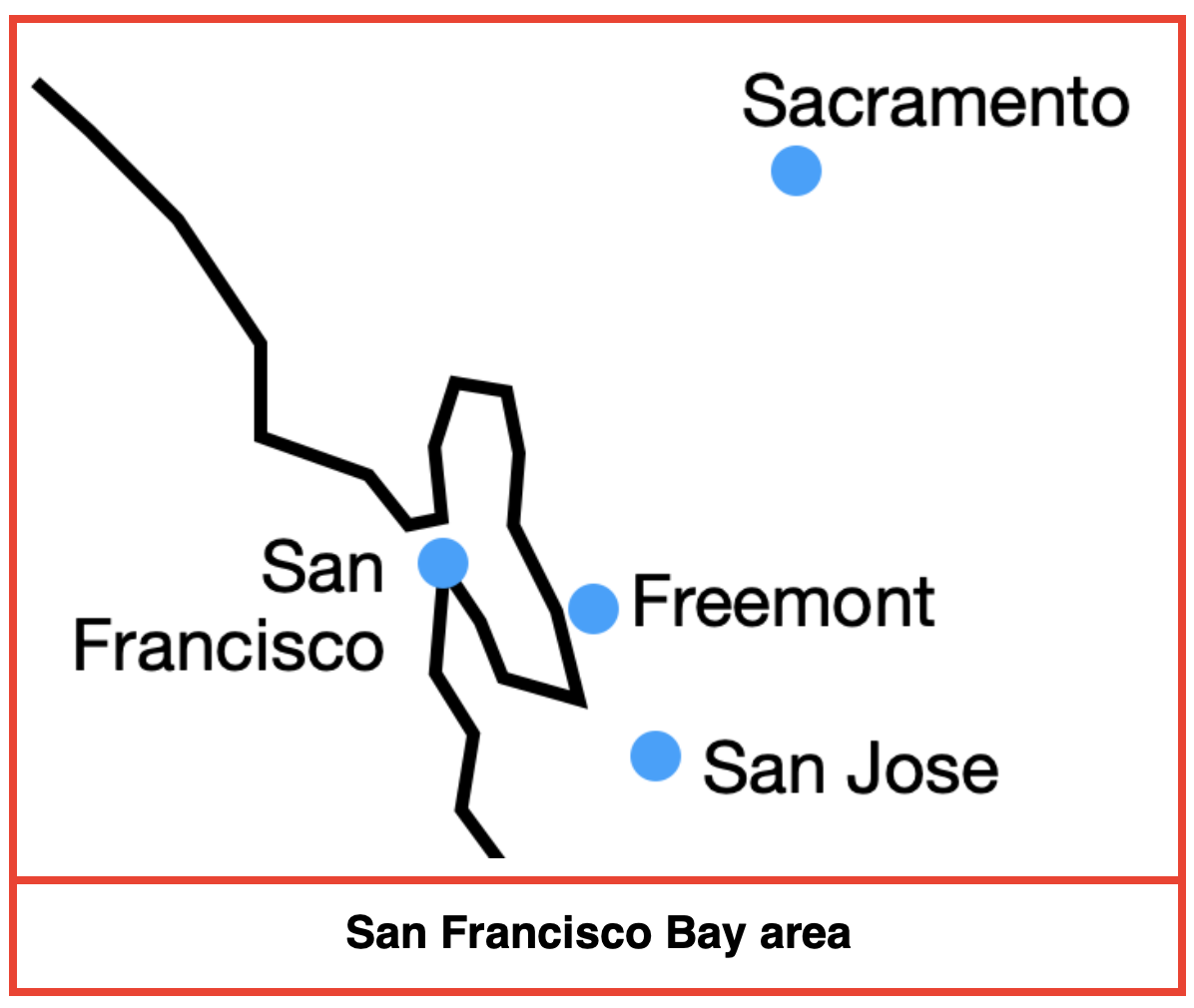
Yes, I remember why I decided to go to San Jose, but I have no idea how I got from Boise to San Jose. It could have been my sister, who was raising a family in Freemont, giving me a ride after her family spent Christmas in Boise. But it seems I would remember some snippet of being crammed in a sedan with those five fine folks for a twelve hour drive.
Having completed what was obviously a completely forgettable journey to the southern edge of San Jose, I continued my quest to avoid freeways and found myself on US 101 headed south. Today I’m sure this, too, is a freeway but in 1971 it was a busy surface street.
I figured any town with a cool song named after it would be good for getting a ride. And, yes, there were vehicles pulling over rather regularly to pick folks up. What I hadn’t counted on was being just another in a hoard of guys and gals and dogs all with the same idea.
Well, folks, I’ve always been a rather meek soul, holding back and figuring it will all work out. But once I had seen three or four rides pull over and get swamped with desperate seekers I knew I had to jump into the fray. That or stand there for a week watching an endless line of other people getting rides.
About then a regular full-sized utility van pulled over close to where several of us were standing. The side door slid open and I was positioned to jump into the middle of this lucky batch. I lunged into a space toward the back of the empty cargo hold, figuring that might keep me from being tossed out if the driver and his buddy decided they didn’t want to transport a fully loaded van full of eager riders.
Yea. I had found the way to San Jose. And I was feeling real good about finding a way out.
My folk’s rental business included two large hay wagons. Because they were four-wheeled trailers the front tires were articulated, so they turned as the tongue of the trailers were pulled into a turn. First by hand-pushing the trailers with my sisters and later by backing them with a tractor or car I got quite proficient at the reverse- of a reverse- steering it takes to maneuver eight wheels, with four of them able to turn, into a parking space.
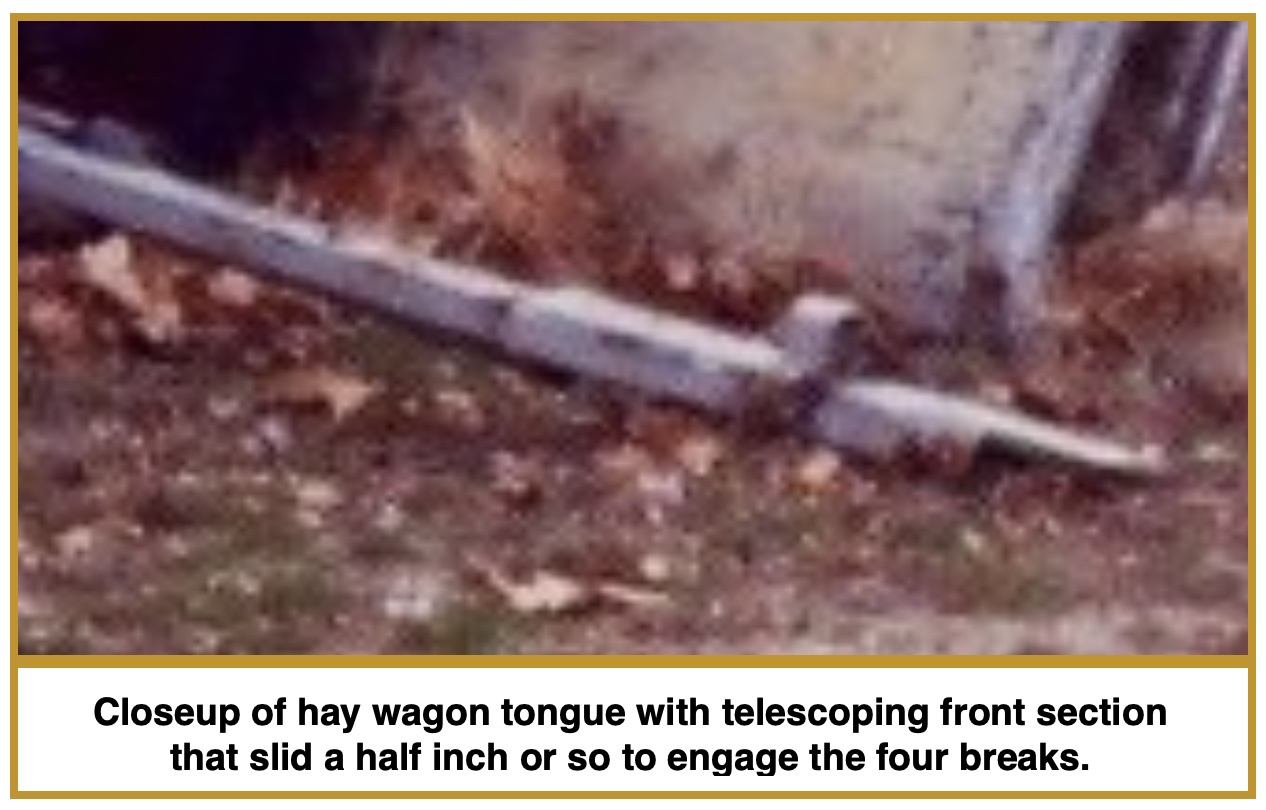
To my boyhood mind another fascination with these trailers was the wire that came from each wheel. Each wire attached to a cable that ran along the center post of the trailers’ undercarriage to the tongue of the trailer. On the tongue of the trailer this cable was anchored to a second part of the tongue that slid an inch or so back and forth over the section of tongue that was attached to the trailer’s undercarriage. This second part of the tongue attached to the vehicle pulling the trailer.
Dad told me these wires and the sliding tongue controlled brakes for the hay wagons. Even after helping dad replace the break shoes I never really believed those flimsy wires and little bit of a sliding tongue would make any difference in controlling a trailer.
My dad died in 1977, when I was 32, and that summer we were getting the property ready for an estate auction. Among other collections were five large stacks of wood. My dad always liked big roaring fires in our home’s brick fireplace and our cabin’s cast iron Franklin stove, so he had plenty of justification for an ever expanding accumulation of wood. Previous woodpiles had made great forts when we were kids.
In 1977 I had no fantasy of cutting all that wood and moving it to the mountain cabin but there were two randomly piled mounds that had already been cut down to the sizes that were useful at the cabin. It seemed practical and an honer to Dad to load up one of our big hay wagons and get a last load of wood to the cabin, so I recruited my friend Andy Venn to help out.
We attached one trailer’s high sides around the flat bed of the wagon and began pitching in chunks of wood. I don’t remember it taking long at all on a pleasant spring day. Getting in the trailer, tossing them down and stacking them beside the cabin’s porch was just as rewarding.
The thing I remember being completely surprised by was the trailer’s breaks. I expected the big V-8 engine of my 1962 Mercury Monterey to pull the grade from Lucky Peak Dam to Highland Valley Summit, a climb of 922 feet in 4.4 miles. No problem there. It was the even steeper grade down to the Mores Creek Bridge, 527 feet in 2.6 miles, that I had been dreading. All that weight pushing against the car, and all that weight pushing the trailer to the side and around the brakes of the car if the tongue were ever so slightly out of true was a disaster in the making. It worried my mind.
It turned out I would never have known that trailer was following me down that hill if I had not attached the tongue to the car myself — and, of course, if I had been able to see anything but a wall of trailer in my rear view mirror. There was never the least bit of the trailer pushing on the car. Nor were there any lunges back and forth because the brakes were setting too strong, holding the trailer back until the car pulled the brakes off and the trailer ran forward pushing the tongue of the trailer into the car. Rather, that steep descent was as smooth as pulling a trailer on a level road.
Hay wagons get heavy, dear reader. Whether loaded with alfalfa, furniture, kids on a hay ride or stacks of wood. I had never thought about the need to break heavy trailers. Nor had I appreciated the clever and perfectly adept way those old timers had mechanically solved a serious problem.
As the engine of the semi truck rumbled from western Nebraska into Wyoming that November day of 1970, the sky turned from haze to grey to dark. Soon a few flakes of snow turned to a storm and began to border on a blizzard. The driver began to fret over getting through before they closed Interstate 80.
There was yet a half a day left as we approached a long upgrade, the steepest pull we had encountered since leaving the Chicago area the day before. It turned out to be the longest and steepest grade we would encounter on the surprisingly flat land this particular road uses to cross the Continental Divide. The wind was whipping on the trailer of the truck but the driver kept it straight and true as he started to talk about the six semi trucks we saw on the side of the road before us.
The hill began to rise under our wheels and it got more steep as we advanced. We passed one stranded truck and its driver struggling in the snow and wind to attach chains. Still our tires held to the road and I was sure glad of that.
About this time the driver said he’d be glad to stop and help these guys but both he and those drivers stumbling in the snow knew if he did we’d be just as stuck as they were. “They are not blaming us at all for keeping up our momentum in hopes of cresting the hill.”
Slowly we passed a second stranded truck and then a third. Each one made me think of how cold my wool coat and thin leather boots would be if we were to be out of the warm cab of that truck.
Fortunately I had been picked up by a driver who knew what he was doing. One by one we kept our slow pace past those trucks. And so did the truck some five lengths ahead, so we didn’t have to stop to avoid his sliding in front of us. The hill got less steep. And we were on our way.
It was dark when we got to the junction of I-80, heading west to California and I-84, heading north to Idaho. The driver was continuing on to the Bay Area and I was headed to Boise but he turned up I-84 to a nearby rest area. He said I should be able to get a ride pretty easy but at least I’d have a warm building to be in while I asked around. He had that right.
The idea of spending a night in an odiferous roadside men’s room was not high on my list of ways to pass the time. But it sure beat the wind and snow outside.
Within ten minutes a couple of college guys said sure, they’d drop me off in Boise.
I felt kind of bad, laying down in their back seat and sleeping all the way. But I was exhausted and they seemed happy with their own company. As I remember they even took me to my parent’s place once we got to town.












 Deans Great Wahoo