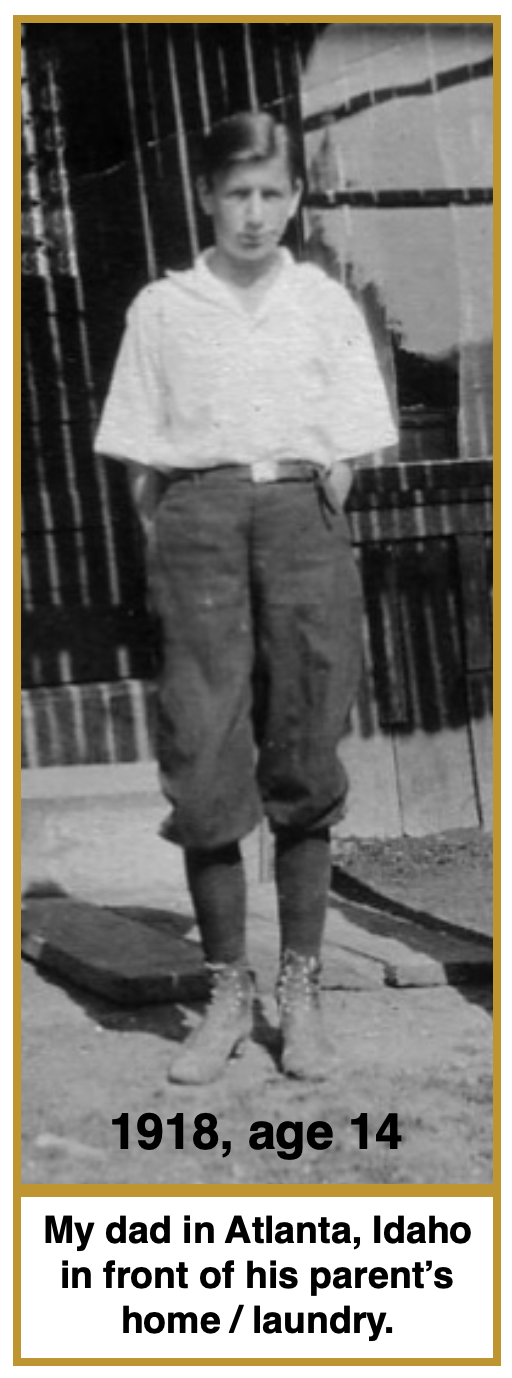
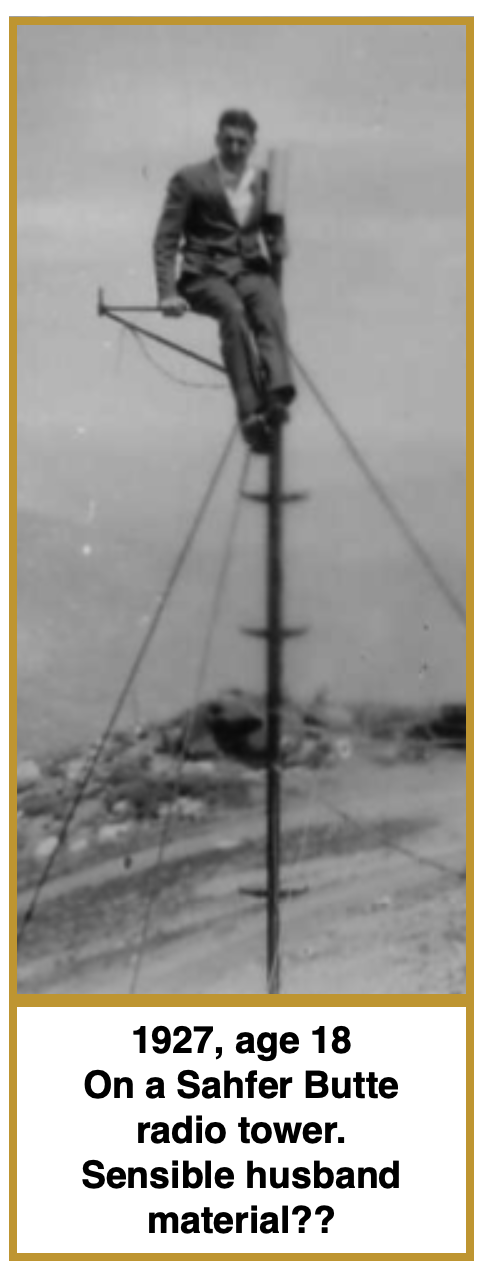
My dad’s mother ran a laundry in remote Atlanta, Idaho, in the mid-1910s. My dad’s memory of those three years resulted in my sisters and I being drug to Atlanta, the associated local towns and over the Sawtooth Mountains all through the 1950s.
Dad had photos from his kid hood in Atlanta as well as 400+ photos from our horse camping trips in the Sawtooths. (There was no lightweight camping equipment in the 1950s)
I was headed to Atlanta in 2025 and created a photo book of stories from the 1910s and 1950s. While there I learned more history and had some adventures — including being the last bloke rescued at the Rescue Cabin between Atlanta and Rocky Bar (see pages 17 and 40-43).
GET BOOKLET includes all three eras, the 1910s, the 1950s, and 2025. You can do a “save as” to get this onto your / device.
It contains all the photos in my booklet. If you want all the 422 photos dad took in the 1950s and all the photos I took on my 2025 trip, email and I’ll get them to you.
For more on our horse camping in the 1950s, search on this site: Sawtooth Kidhood / Atlanta to Alturas Lake / /Grandjean to Alpine / Car Camping
A year had passed since my mother’s ordeal delivering her oversized baby boy. The black and blue lumps on my head had long since formed into the perfectly formed skull I’ve been blessed with ever since. (That’s my story and I’m sticking with it!)
Screenshot
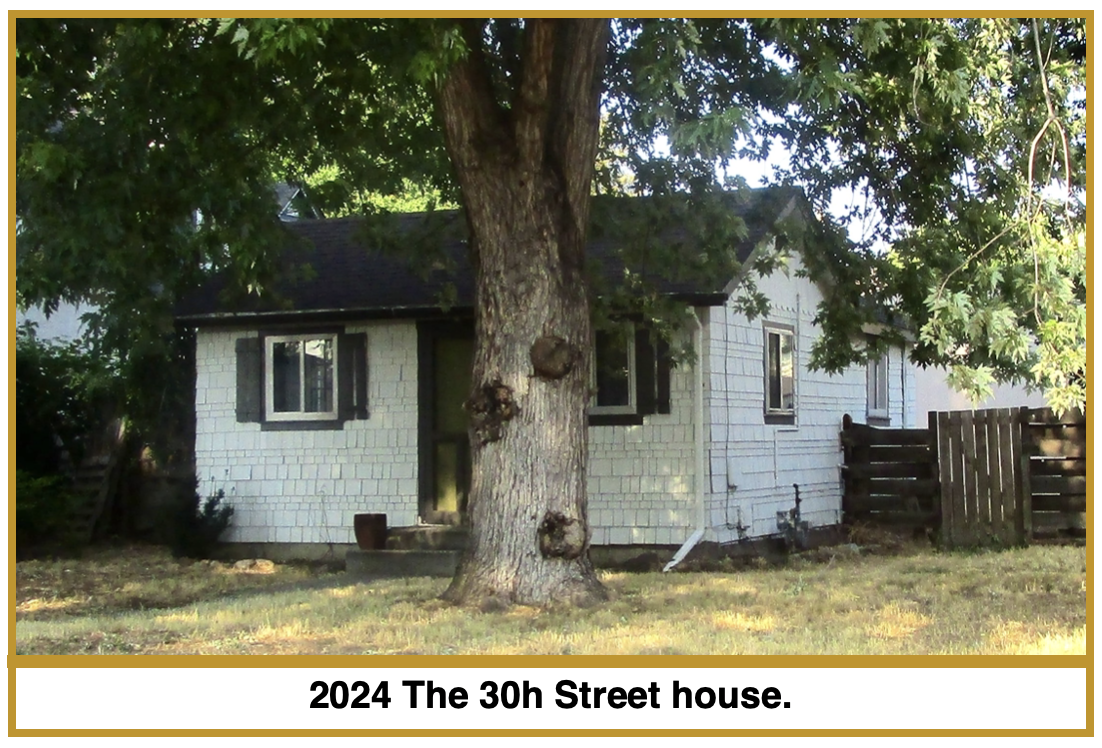
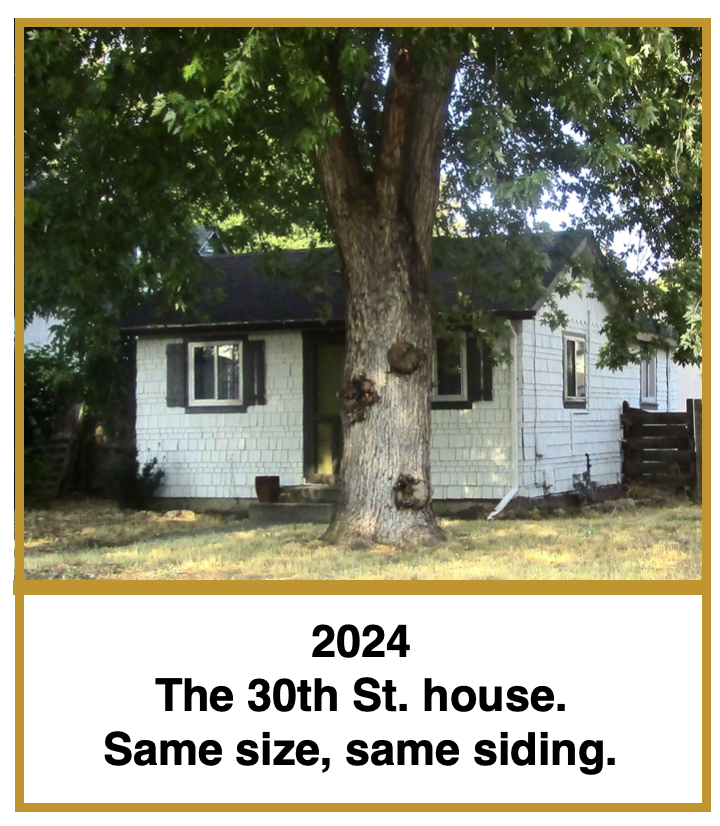
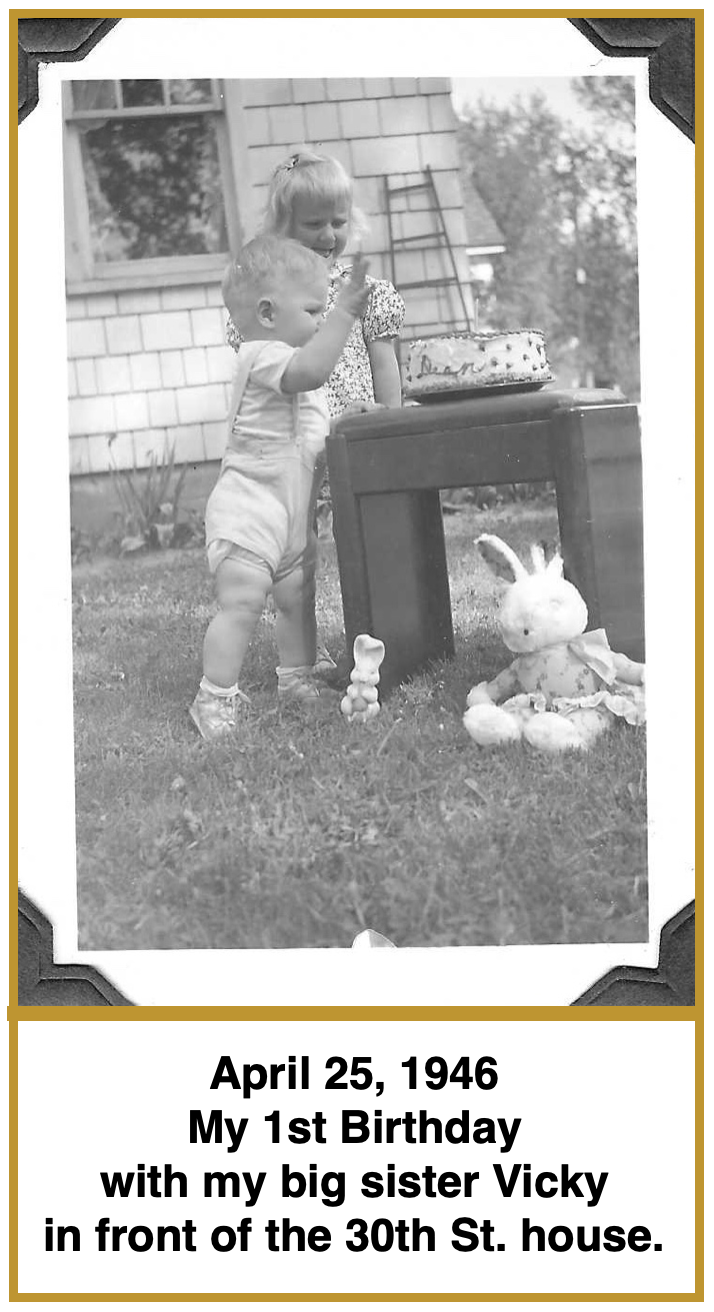
We were still living in the tiny house on 30th Street. Dad was actively renting the trailer he had purchased to build the tiny house and he was more than happy to stop and chat with everyone who asked about it. In fact, with no credit card records in 1946, he had to chat and get enough evidence so the folks renting the trailer would bring it back.
I don’t remember it but my older sister Vicky does and my mom sure did. Apparently Dad was responsible for watching Vicky and I when he got busy conversing with a neighbor. Or renter. It must have been a very important chat.
Screenshot
There was an irrigation ditch running through the property, small enough for any adult to step over and any three year old to jump across. And, apparently, just the right size for a one year old to fall into without having the room to roll over and get his face out of the water.
My sister noticed my laying in the ditch and struggling. Dad ignored Vicky’s frantic cries. So she reached down and pulled me out.
Thanks, Sis …
There is no record of the reaction when my mother asked about her dripping wet muddy boy but the marriage lasted another thirty-one years.
A year had passed since my mother’s ordeal delivering her oversized baby boy. The black and blue lumps on my head had long since formed into the perfectly formed skull I’ve been blessed with ever since. (That’s my story and I’m sticking with it!)
Screenshot
We were still living in the tiny house on 30th Street. Dad was actively renting the trailer he had purchased to build the tiny house and he was more than happy to stop and chat with everyone who asked about it. In fact, with no credit card records in 1946, he had to chat and get enough evidence so the folks renting the trailer would bring it back.
I don’t remember it but my older sister Vicky does and my mom sure did. Apparently Dad was responsible for watching Vicky and I when he got busy conversing with a neighbor. Or renter. It must have been a very important chat.
Screenshot
There was an irrigation ditch running through the property, small enough for any adult to step over and any three year old to jump across. And, apparently, just the right size for a one year old to fall into without having the room to roll over and get his face out of the water.
My sister noticed my laying in the ditch and struggling. Dad ignored Vicky’s frantic cries. So she reached down and pulled me out.
Thanks, Sis …
There is no record of the reaction when my mother asked about her dripping wet muddy boy but the marriage lasted another thirty-one years.
(originally blogged as My Folks #11: Birthing This Boy – fits in the story here)
I don’t remember the day, but my Mother sure did. April 25, 1945. Five days before Hitler murdered his newly married bride and then shot himself. At 6:25 in the morning, despite Mom’s hard work and interminable efforts, my fat head just would not get beyond crowning.
Finally the doctors decided to take drastic measures by placing a contraption with three suction cups on what was showing of my head and yanking all 9 pounds and 5 ounces of me from her body.
Babies skulls are soft, an essential part of our getting through the birth channel. It is why the three suction cups that pulled me out left three very prominent black and blue lumps crowning the fat glory of me.
Somehow, after all that, my beautiful mother generously still loved me!
Years later Mom told me how excited Dad had been, running along the line of new dads looking through a viewing glass to see their newborns for the first time. Cigars were passed out and lit up as he made sure everyone looked where he was pointing while he exclaimed: “That’s my boy! That’s my boy!”
It was then Mom looked at me and confided, “But Dean — you were the UGLIEST baby I had ever seen!”
I was born when my folks lived in a tiny one bedroom house on 30th Street in Boise. It still stands a block north of the baseball backstop of Lowell Grade School. My folks had build the house in the early 1940s when WWII was introducing rationing and finding materials was getting more difficult by the day.
Dad bought a four-wheel John Deere trailer that featured articulated front tires that turned into corners. It also boasted all-wheel breaks that used a sliding feature on the tongue to sense when the weight of the trailer was pushing on the that was towing it. As the trailer pushed against the towing vehicle the harder the tongue pulled on wires that applied the brakes.A few years later he bought a second one.
Screenshot
Some fifty years later I piled one of those trailers piled high with firewood and was stunned as I pulling that large load over the Lucy Peak grade to Idaho City. The brakes were so smooth I forgot there was a load behind me — until every time I wanted to check out the rear view mirror and saw only thefront end of a large trailer!
My dad bought that trailer with the turning wheels and all-wheel brakes so he could drive to the sawmill in Horseshoe Bend and enjoy wholesale prices on the lumber to build our little house. Anyone remembering the precipitous and winding 1940s Horseshoe Bend Grade knows how important those steerable wheels and brakes figured into putting a roof over our heads.
It wasn’t long before one and then another neighbor came knocking on our door asking if they could rent that trailer. When folks from across town started showing up wanting to rent it my folks looked into renting a vacant lot across the alley so they could park more trailers that served different needs, like hauling a couple of cows or a load of coal. Worbois Rentals was launched before it had a letterhead.
Or at least I think it was. Being an infant at the time my memory is rather blurry on the details.
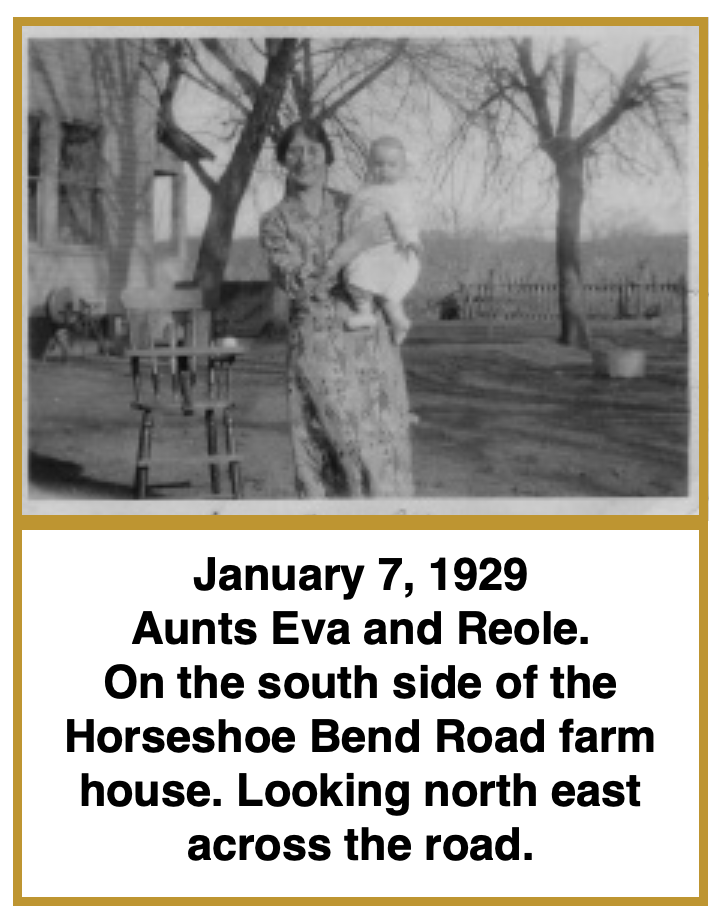
My dad’s plan on marrying my mother was the same it had been with his first wife — to move in with his folks at the farmhouse out on Horseshoe Bend Road.
It was a large two-level house with the latest in modern counter-balanced windows that offered good circulation in the summer months. It also featured an outhouse, chicken coop, hay barn and milking shed, all of which guaranteed a rich “bouquet” that permeated the entire premises. In that department I’m sure it was no different than any barnyard.
Years later my mother assured me she was having nothing to do with that plan: “He was not moveing me into that smelly old house to take care of his mother and aging brother and sister.”
And he didn’t!
Instead they rented a small place in Boise until they bought a single lot on 30th Street. It was and remains at one block north of Lowell Grade School’s baseball backstop.
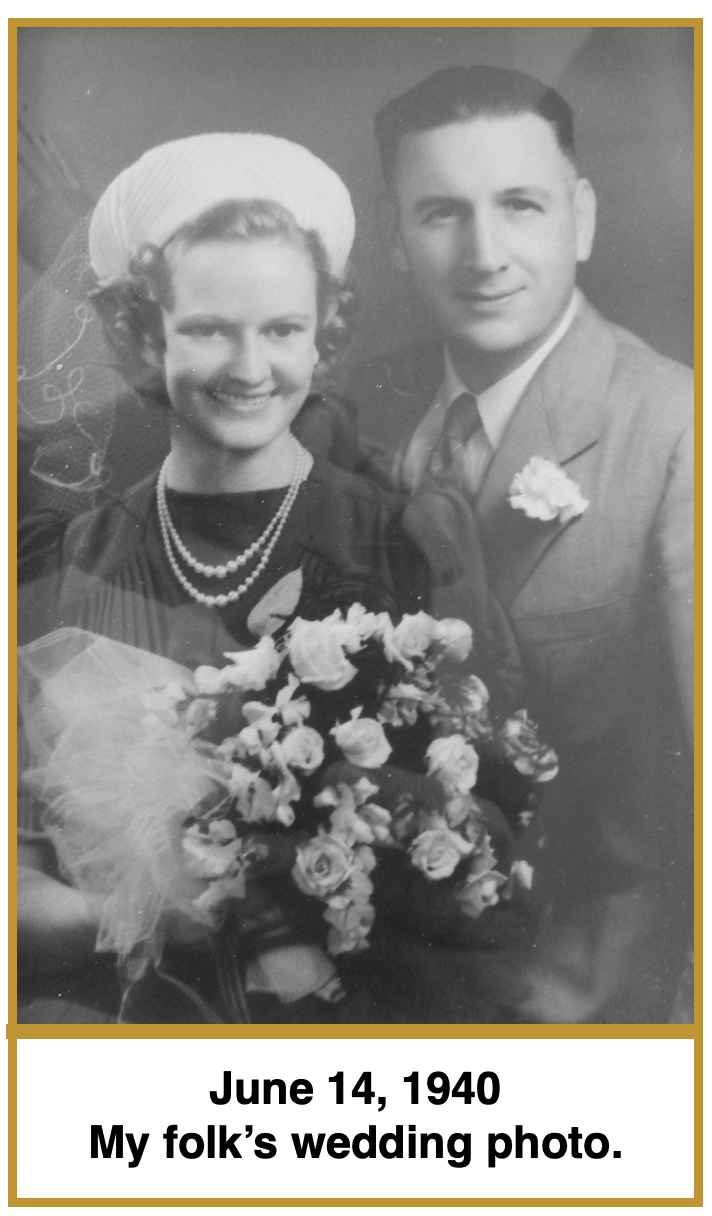
Soon they were building a small one-bedroom house. Three years after their wedding on June 14, 1940, my older sister joined the few pieces of furniture that were crowding that space. I joined them two years after that.
My dad was born in November of 1903. Fourteen yeas later, in March of 1917, my mother was born.
Dad spent his early teens in Atlanta, Idaho, an isolated mountain mining town. He chopped wood and carried water to keep his family’s laundry with the scalding water his mother needed to get the grime of the miner’s clothes. And he picked up a life-long love of music from a young schoolmarm he appreciated for the rest of his life. The family moved to what is now Old Horseshoe Bend Road, one lot south of Hill Road, when he was fourteen.
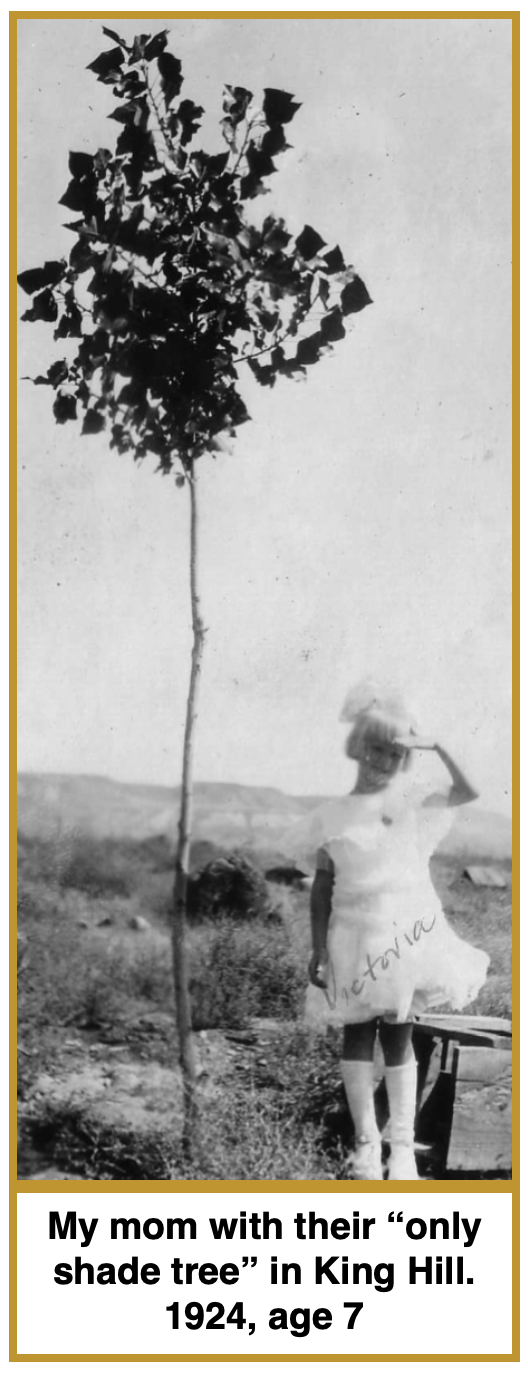
Mother’a early school years were spent in the isolation of Idaho’s central desert on the last farm irrigated by the King Hill canal. Thanks to wooden flues that burned whenever a brush fire swept through the sagebrush the irrigation water was unreliable. Combined with potatoes that had not yet been bread for the summer heat and the never-ending stones coming up in the fields, the family lost the farm and moved to Boise when she was thirteen.
Dad’s mother was a Bible-banging Christian who insisted he go to a Nazarene high school in Nampa. He commuted on the electric Interurban Rail Way for a few days before he came home and declared if he had to keep doing all that praying he wasn’t going to go to school at all. She relented and he got on the Interurban going the other way to Boise High. Because the family had moved so much in his childhood, dad graduated from Boise High twelve years before mother did, at age twenty.
Dad’s mother used her religion to keep two of her five children home so they would be there in her old age. Dad became resentful of this manipulation and, later, of how religion kept his sister impoverished with worries of damnation for the rest of her life. Long before I arrived my father had given up on religious institutions.
My mom was raised a believing Lutheran but not holier-than-anyone. She took we three kids to church while dad was glad to stay home and enjoy the Sunday peace and quiet.
While my mother was getting through twelve years of school my dad got married and — gasp, — divorced. He also played trombone in a band in bars, smoked cigarettes, and was apparently a rather randy young man about town.
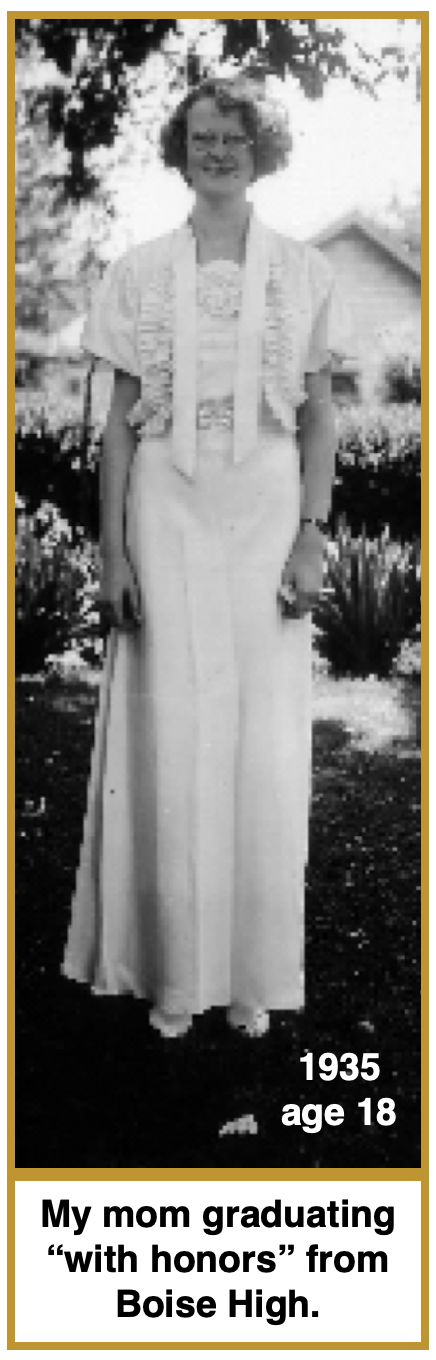
From Boise High my mother graduated into the Great Depression. With her father very ill and unable to work she went to work as a secretary to support the family. She also made sure her younger sisters had the prom dresses and year books that make teen years memorable and which she had missed out on.
In early 1938 the Boise Light Opera company staged a production of Gilbert & Sullivan’s grand romp The Macado. Both my parents got singing parts and were soon dating — she, the hard working young lady from a good home and he the free-ranging older man it took to charm her with a different life. They married in 1940.
My mom’s folks fretted over the history of divorce, drinking, smoking and trombone playing. Dad’s mom squirmed over his marrying outside the Only True Religion. There is no doubt the old folks were talking.
Indeed, when my dad died in 1977 my mother’s mother was still alive. Grandma had never driven so I picked her up and took her to dinner at my mother’s house. Afterward, when we got in the car to take Grandmother home, she immediately folded her hands in her lap, gave a resolved sigh, and observed, “Well. That marriage didn’t last long.”
“No, Grandmother,” I replied. “Only until death did them part after thirty-seven years.”
I don’t remember the day, but my Mother sure did. April 25, 1945. Five days before Hitler murdered his newly married bride and then shot himself. At 6:25 in the morning, despite Mom’s hard work and interminable efforts, my fat head just would not get beyond crowning.
Finally the doctors decided to take drastic measures by placing a contraption with three suction cups on what was showing of my head and yanking all 9 pounds and 5 ounces of me from her body.
Babies skulls are soft, an essential part of our getting through the birth channel. It is why the three suction cups that pulled me out left three very prominent black and blue lumps crowning the fat glory of me.
Somehow, after all that, my beautiful mother generously still loved me!
Years later Mom told me how excited Dad had been, running along the line of new dads looking through a viewing glass to see their newborns for the first time. Cigars were passed out and lit up as he made sure everyone looked where he was pointing while he exclaimed: “That’s my boy! That’s my boy!”
It was then Mom looked at me and confided, “But Dean — you were the UGLIEST baby I had ever seen!”
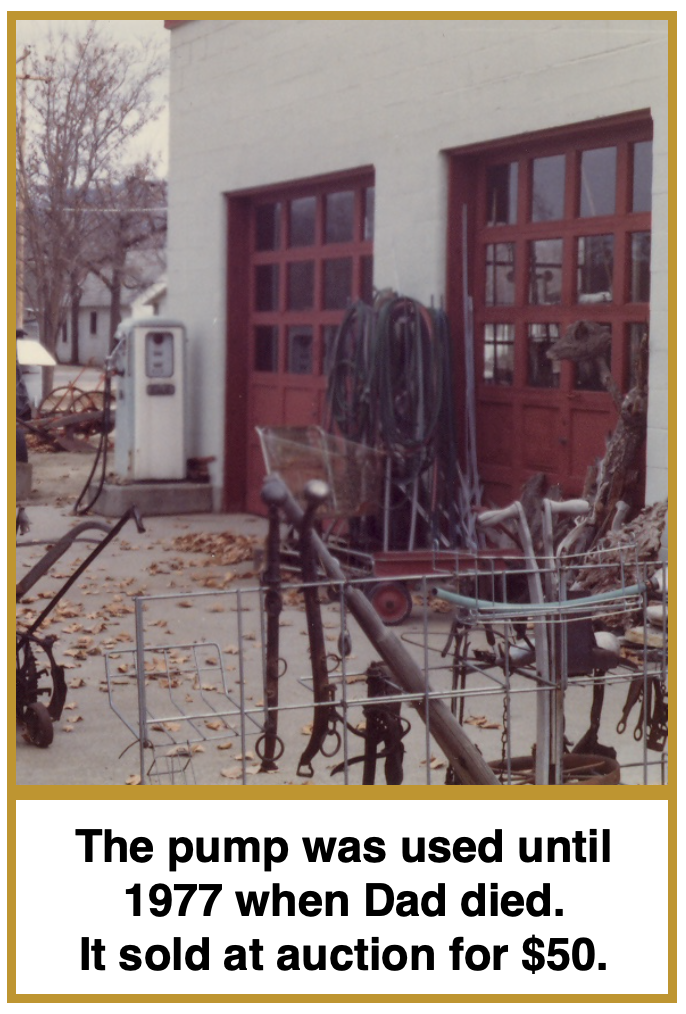
Since we rented tractors by the gallons of gas the customer used my dad decided he needed an actual gas pump to do the measuring. This was when I was six or so and I have no idea how gasoline was measured before dad found a used pump and went about installing it.
Acquiring the pump and getting it installed happened when my mother took my two sisters and I to see Aunt Carol in her new place on a farm outside of Hillsboro, Oregon. Being 1953, US Highway 30 was a miracle of modern Federal construction — two full lanes wide, paved, with no railroad crossings, and the same signage from coast to coast to guide our way. Yes, there were local speed limits through every town and lines of cars behind every truck struggling to grind its way to the top of every hill. But sometimes the highway was even three-lanes wide so cars could pass trucks on steep grades!
When we got home from Aunt Carol’s I was shocked to find a modern gas pump sitting at the end of our house. It was modern in that it ran on electricity, showed gallons pumped, the price, and it had a little twirly thing in a bulb full of gas so you knew gas was flowing to twirl the twirly.
I had no concept that you could have your own gas pump at your house. Even the idea was cool!
During our absence dad found the used pump, installed it and ran underground pipes to two above-ground tanks he had installed some twenty feet to the north.
I got real good at using that pump. First to measure how much gas our customers used (for renting tractors we charged $5 for the first gallon, $4 for the second and $3 for all after.) Later I took it for granted to keep my parent’s cars topped off before heading out on teenage adventures.
Now, six decades after returning from visiting Aunt Carol and finding a modern gas pump attached to our house, one thing still dangles in my heart about that day — scratched into the concrete anchoring the pump, was the date dad had built the pump’s foundation. And the word, “Alone.”
My mother gave me a very touching card for my 52nd birthday. She wished a happy birthday and a year full of pleasant surprises. She recalled fond memories and said I was always a joy to watch grow up. I was basking in the warmth of her when I read about one experience from 1948 —
“Of course there were times like the time you thought you were doing such a good job of filling our gas tank with water!! When you were about 3. I’ll never forget that scene of a 3 year old standing behind our car with the hose running water into the gas tank!”
Well. I ended up waiting tables for a profession. It seems I have always prided myself in being helpful.