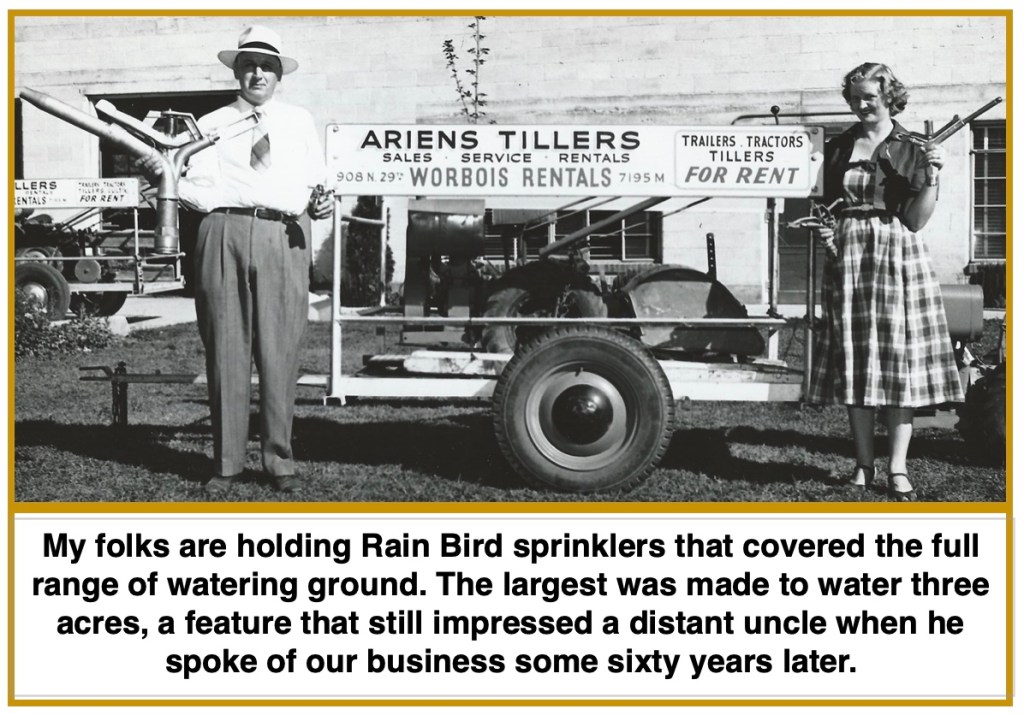
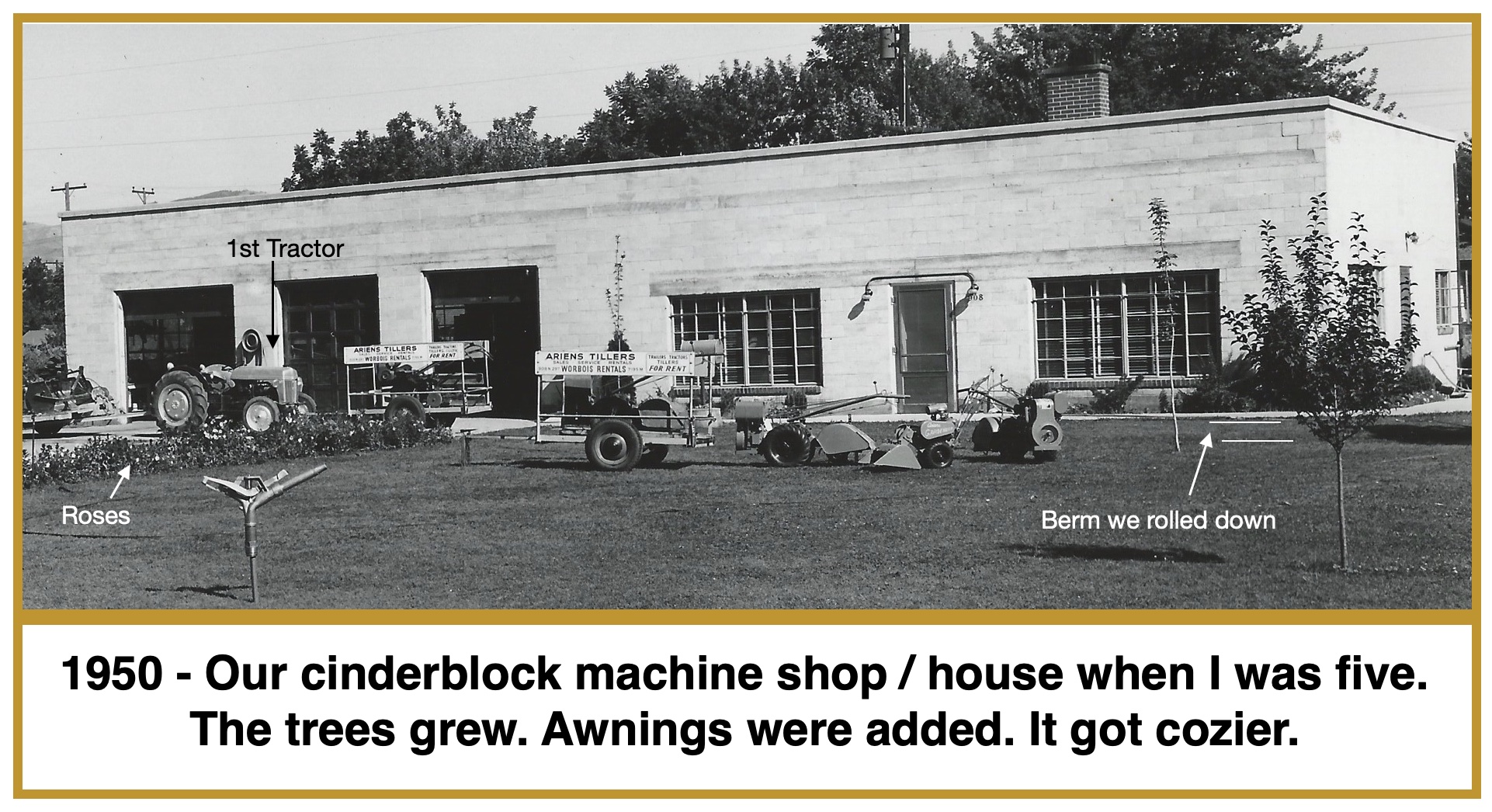
By 1950 my folks had secured retail dealerships for Rain Bird sprinklers and Arians tillers. A lot of sprinklers moved through our garage while some Ariens tillers stuck around to be rented again and again. We even had special trailers for getting them to the job site.
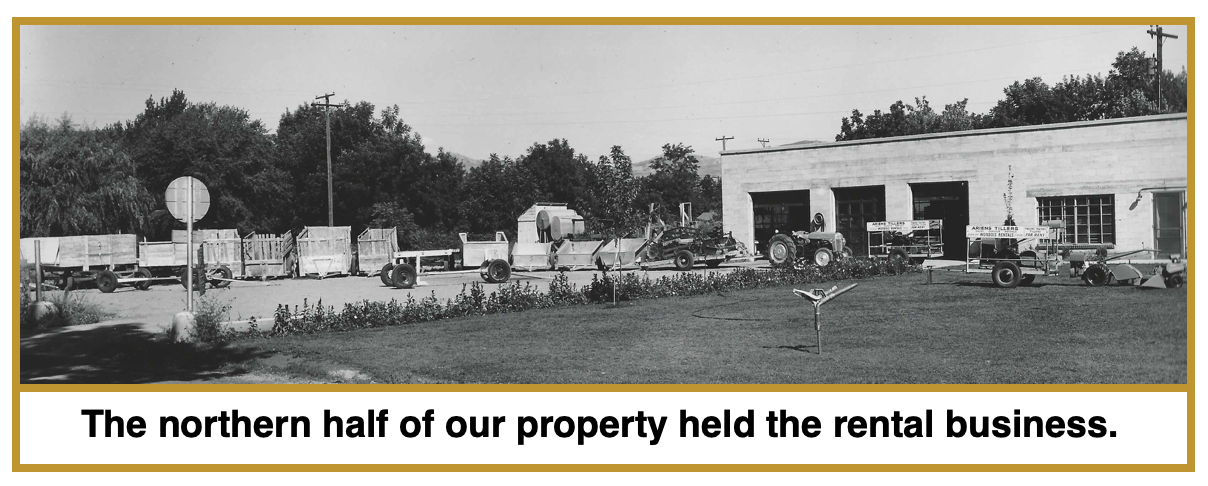
For three years the trailers and tillers and tractor all behaved themselves by staying on the graveled northern half of our property. But in 1950 we kids watched our folks line things up in front of our garage doors while even spilling some over onto the lawn. The lawn was our play place! I was five when my folks started acting funny.
Years later I came across evidence of how this strange behavior came to live as snippets in my memory.
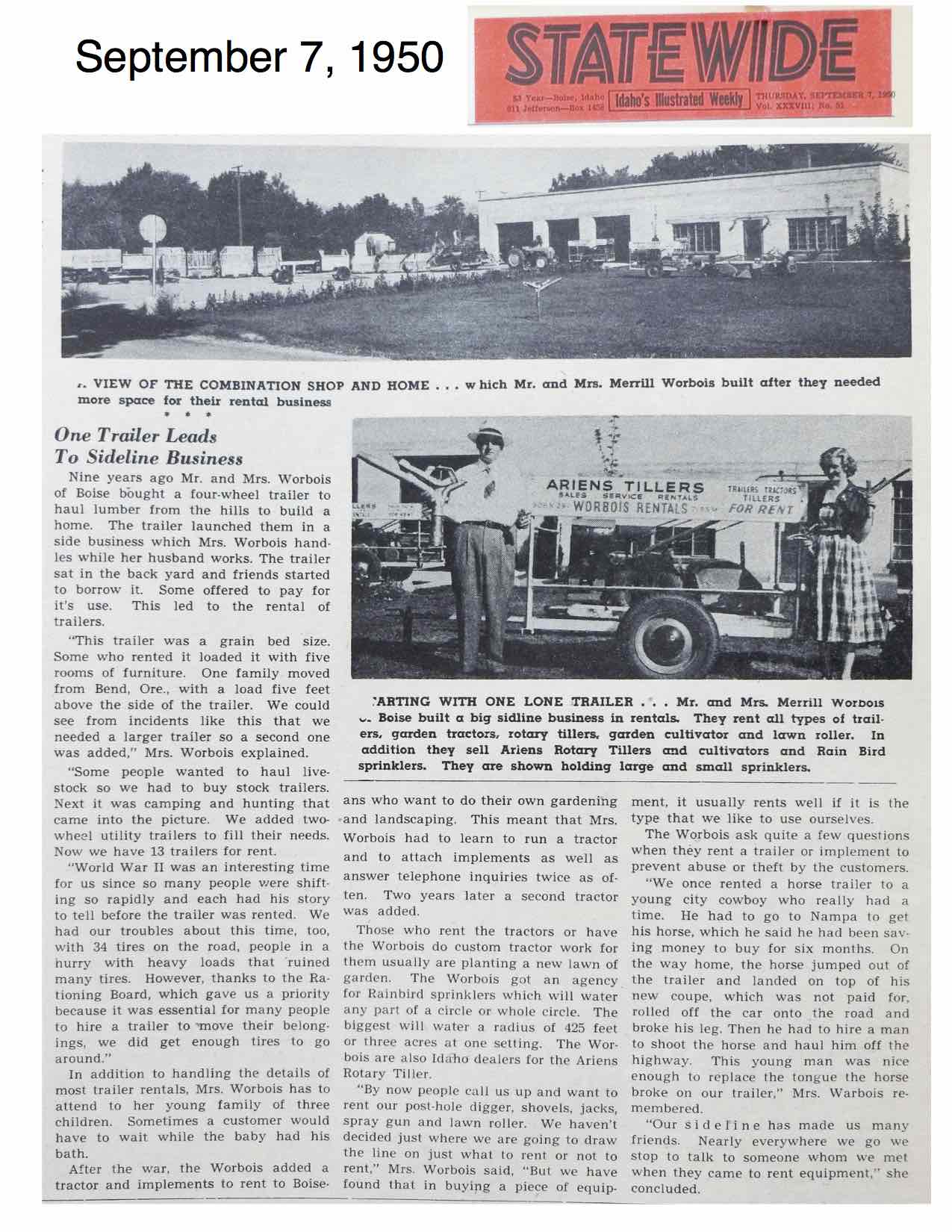
Thank goodness my folks saved the photos this reporter took of our property as well as copies of his article. It sure gives insight to my mother’s busy life and my dad’s sensitive heart. Here is a link to a PDF that will open for easy reading or downloading.
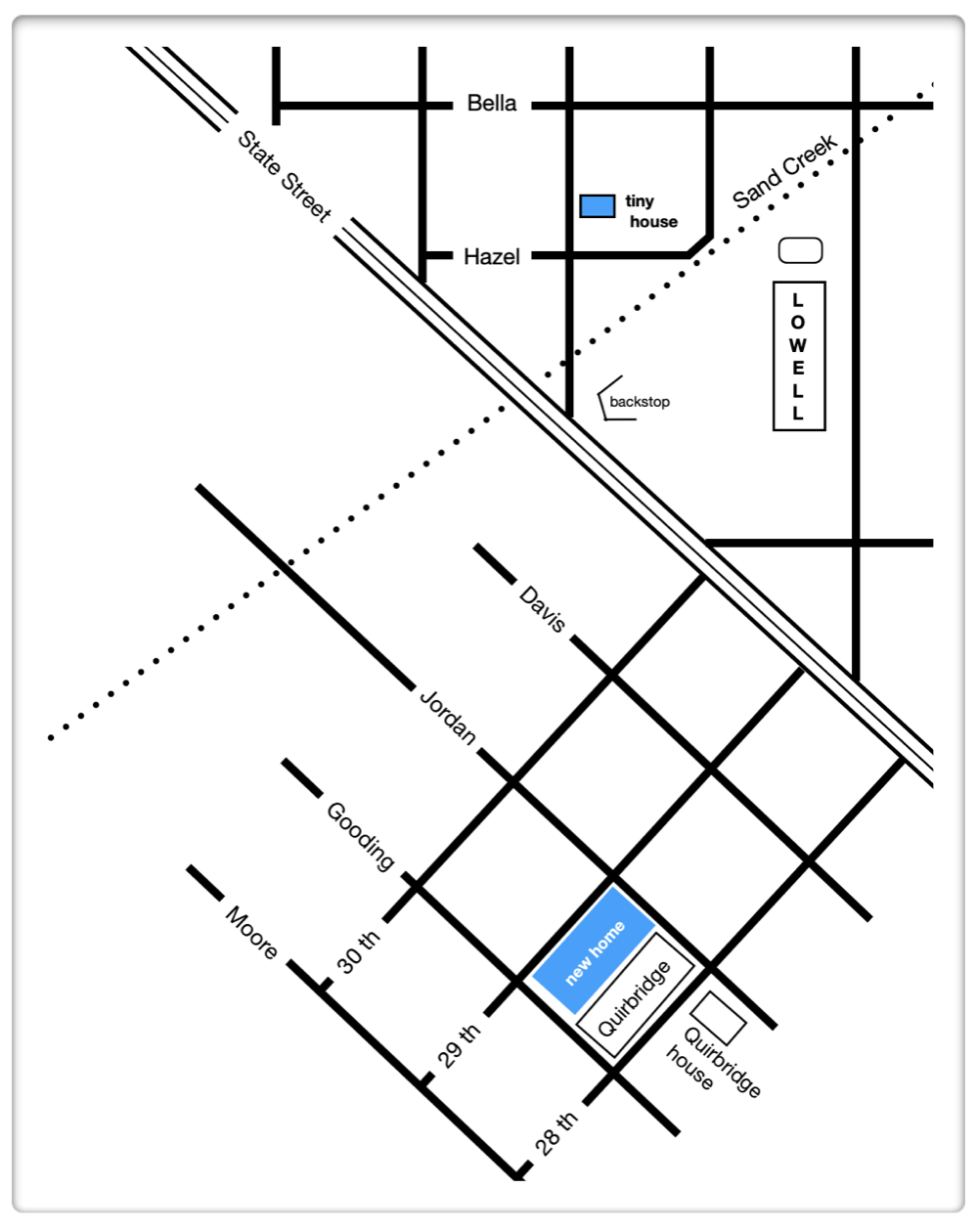
Nothing about building our new home south of State Street remains in my memory, but then I was one year old at the time. I presume most of those days and evenings were spent with my mother at our tiny home on 30th Street north of State Street while dad spent evenings and weekends five blocks to the south, turning half of Mr. Quirbridge’s farm into gravel and lawn.
The block slanted from the northeast to the southwest. A level pad had to be created before construction of a combination machine shop and living space could begin.
On the north half of the building, this pad left the three large doors of the machine shop essentially level with the gravel lot. The southern half of the building extended onto a two-foot berm that leveled the slopping ground. This berm was soon covered by lawn where we toddlers spent hours rolling down this gentle slope.
If only my folks were still with us so I could ask, but I think scratching the northern quarter of the block into gravel for renting trailers and leveling a pad for an extended building would have been when my parents thought it prudent to invest in a Ford N Series tractor. They soon found the requests to rent the full-sized tractor were as insistent as those looking for trailers.
By as early as I remember we were watching two Ford N Series tractors driving away in the hands of strangers. Some helped with the large gardens people were still maintaining. Some were turning those gardens and Boise’s surrounding hills into home sites.
Since Boise City kept my folks from opening a trailer rental business within city limits, they looked five blocks south of our tiny one-bedroom home on 30th Street.
Those five blocks meant they were looking for property in Ada County. Where the streets were dirt. Crime prevention was handled by the sheriff. Septic was in individual tanks. And fires were put out by the Collister Fire District, a county entity that was “really very good.”
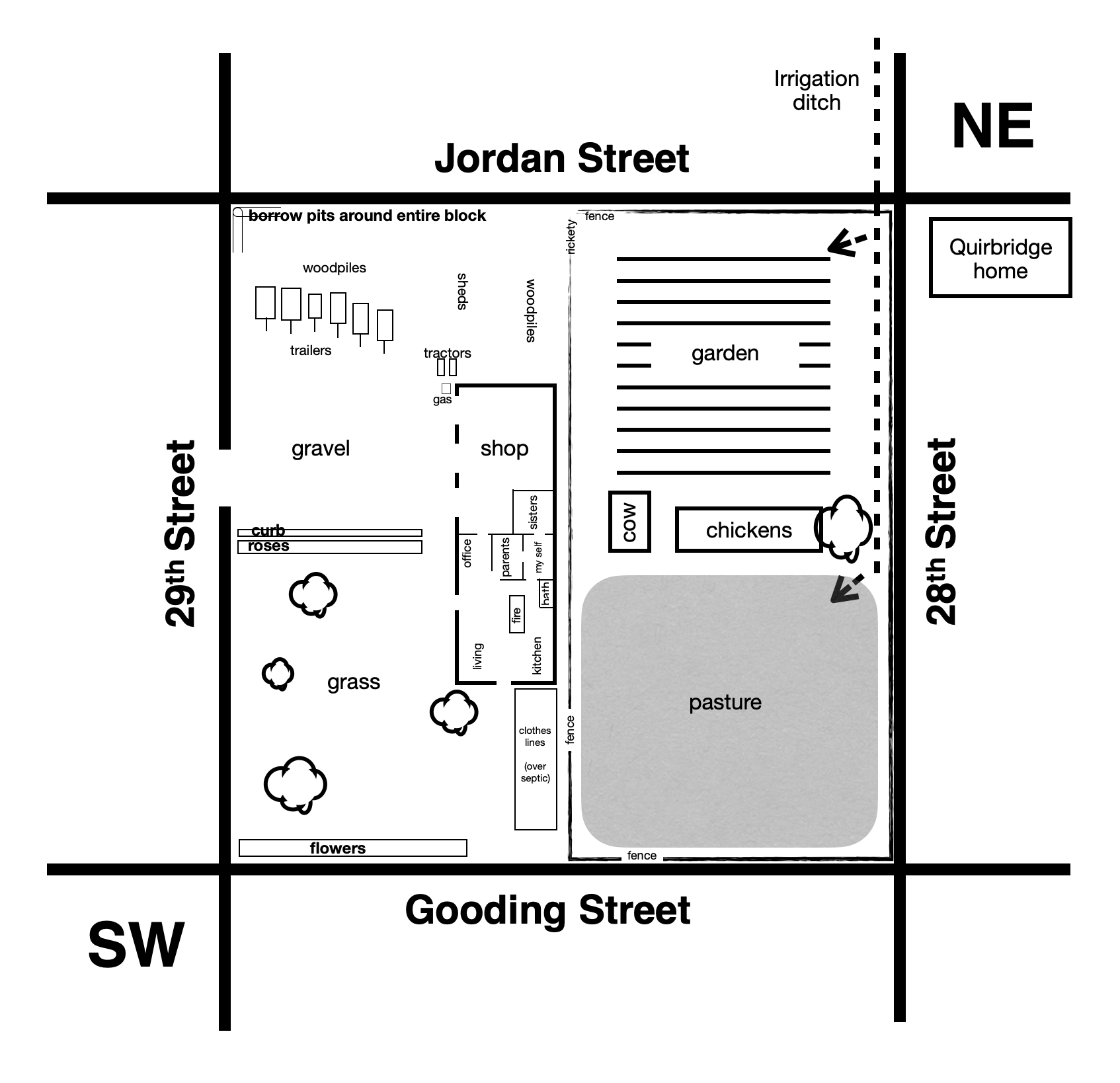
My folks found a block of pasture and garden land surrounded by 28th, Jordan, 29th and Gooding Streets owned by a Mr. Quirbridge (spelling?). It seems Mr. Quirbridge was ready to slow down. He took my folks up on an offer to buy the western half of his farmland.
Mr. Quirbridge kept the eastern half of the block. He kept his cow that mostly stayed in the pasture on the south side of his half-block. He continued to plant a thick garden that threatened to outgrow it’s northern quarter of the block. And he kept his chickens that didn’t seem much interested in wandering further than the rickety fence that surrounded his entire half-block.
And that, my friends, is how I spent fifteen years growing twenty-one blocks from the Capital Building of the State of Idaho. On roads that were dirt until after I graduated from Boise High School in 1964.
By 1946, with my sister being three and myself having survived my first year, our tiny little house was getting snug. At the same time thelot across the alley had no more room for our expanding fleet of trailers.
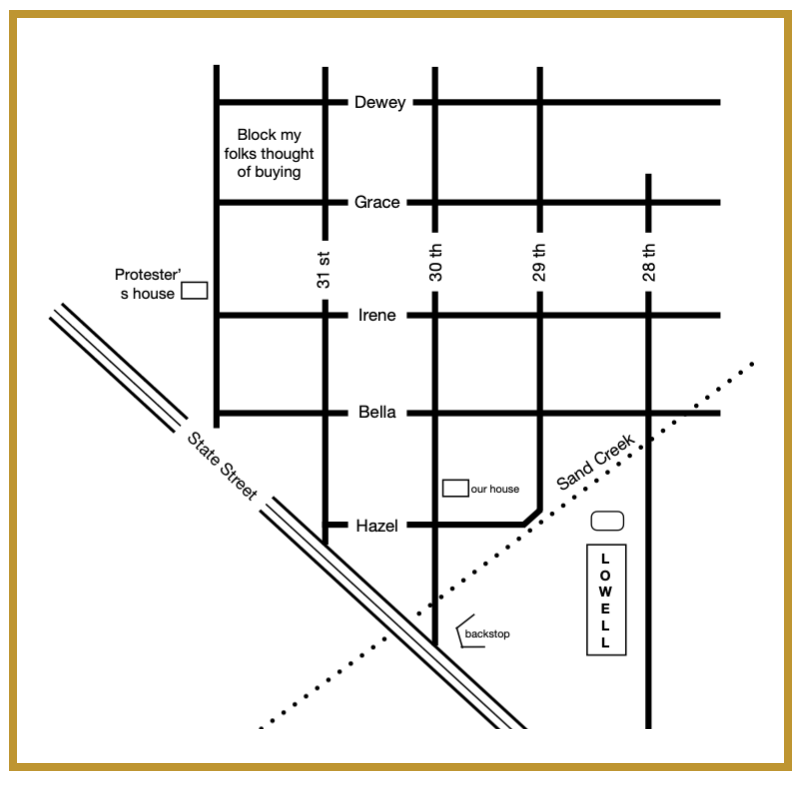
Two blocks north of our house on 30th Street, the block between 31st and 32nd Streets sat empty. It would sure be easy to move to.
It was a fine, flat patch of land perfectly adequate for my folk’s needs. It was in Boise City’s boundaries so was blessed with paved streets, fire and police protection and sewers to whisk our cares away.
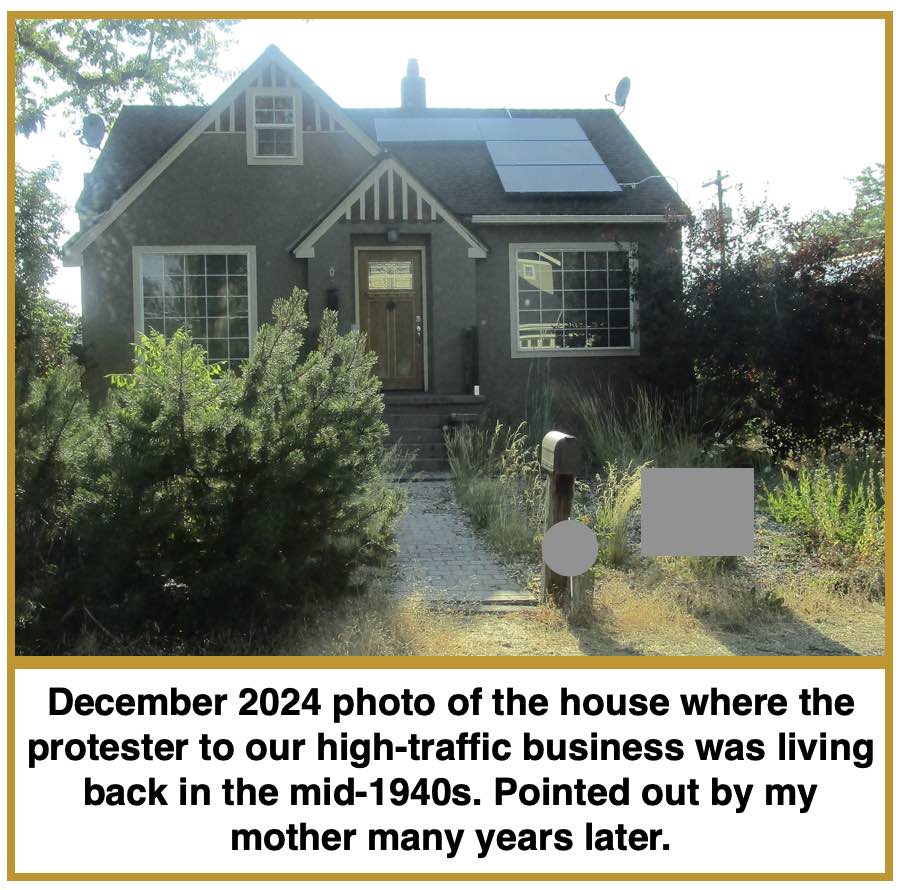
It was also covered by Boise City rules, one being that neighbors could express their opinions about a business moving in next door. Years later my folks pointed out the home of the lady who thought the traffic, noise and dust of renting trailers would be too noisy, too much traffic and too much dust. My folks had to agree but it did end their plans. They found another local some seven blocks away, south of State Street.
Screenshot
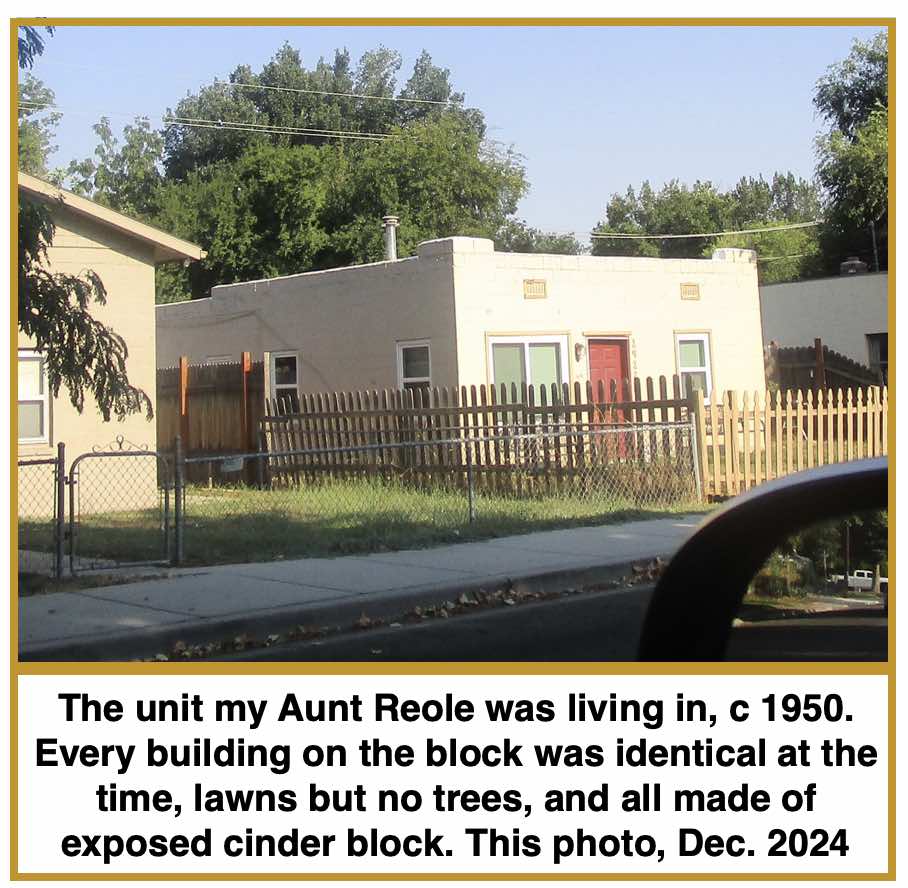
After we moved from 30th Street the block my folks were eyeing for their business was filled with buildings even smaller than our 30th Street house. They were twelve freestanding buildings, made of cinderblock and all identical. Lined up in two rows, six were facing 30st Street and the other five had a view of 31st Street.
At one time one of those buildings overlooking 31st Street was rented by my dad’s sister Reole and her handsome husband Earl. When I was six or so we visited Reole, Earl, and their sons Rodney and Craig at their home.
Screenshot
At the time we were living in a cinder block house and I had a legos-like toy set made up of cinderblock style pieces, so I identified with the life style. I vividly remember those cinderblock buildings standing alone on that otherwise empty city block. Now, in 2025, the buildings are still in use but there are carports, trees, awnings, and other additions making them much more cozy
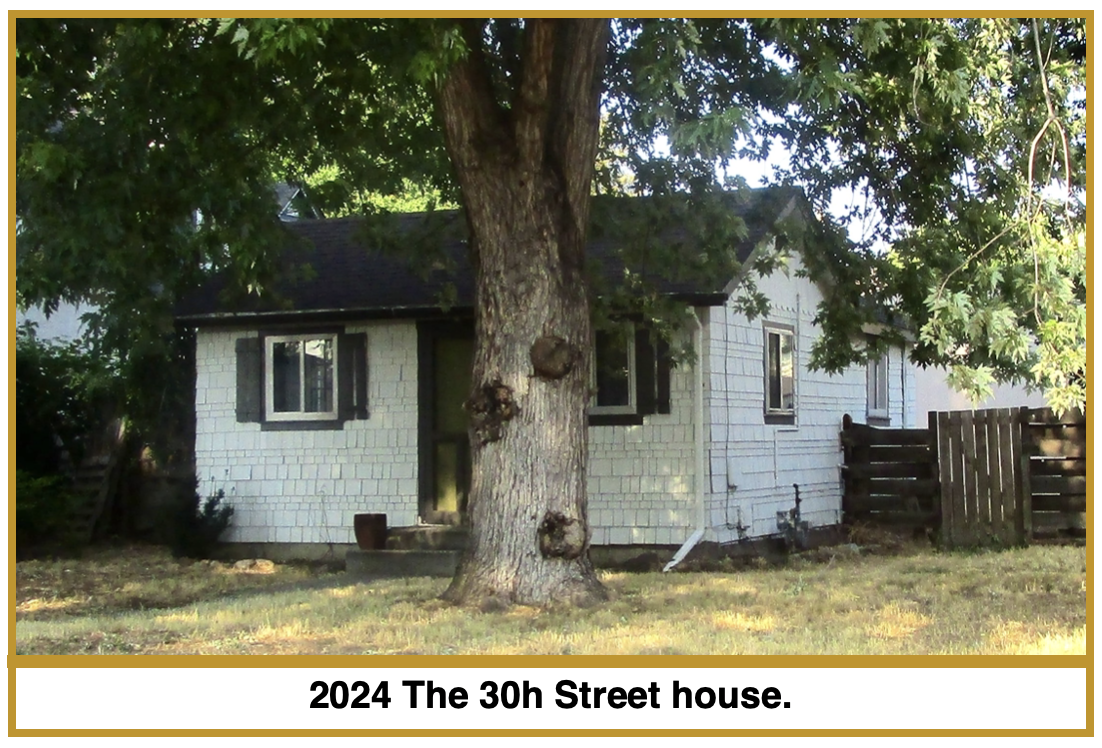
I was born when my folks lived in a tiny one bedroom house on 30th Street in Boise. It still stands a block north of the baseball backstop of Lowell Grade School. My folks had build the house in the early 1940s when WWII was introducing rationing and finding materials was getting more difficult by the day.
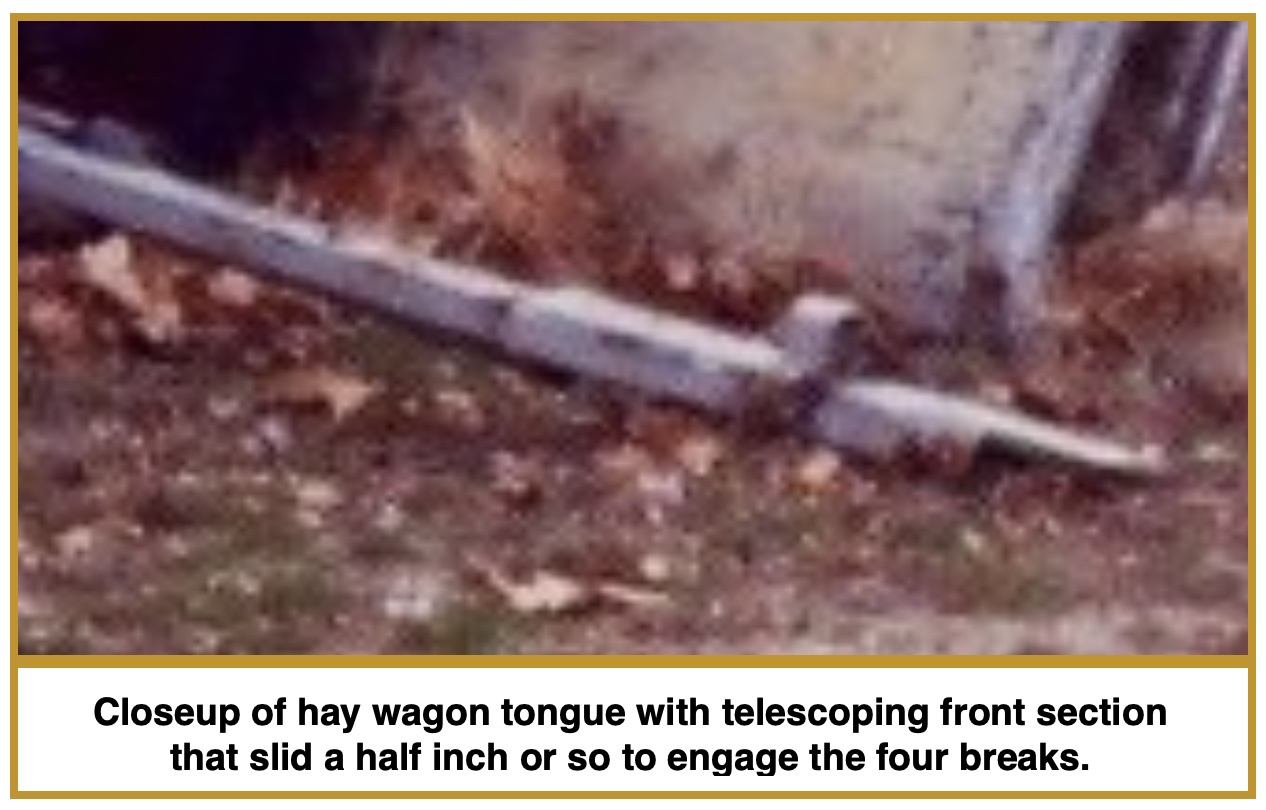
Dad bought a four-wheel John Deere trailer that featured articulated front tires that turned into corners. It also boasted all-wheel breaks that used a sliding feature on the tongue to sense when the weight of the trailer was pushing on the that was towing it. As the trailer pushed against the towing vehicle the harder the tongue pulled on wires that applied the brakes.A few years later he bought a second one.
Screenshot
Some fifty years later I piled one of those trailers piled high with firewood and was stunned as I pulling that large load over the Lucy Peak grade to Idaho City. The brakes were so smooth I forgot there was a load behind me — until every time I wanted to check out the rear view mirror and saw only thefront end of a large trailer!
My dad bought that trailer with the turning wheels and all-wheel brakes so he could drive to the sawmill in Horseshoe Bend and enjoy wholesale prices on the lumber to build our little house. Anyone remembering the precipitous and winding 1940s Horseshoe Bend Grade knows how important those steerable wheels and brakes figured into putting a roof over our heads.
It wasn’t long before one and then another neighbor came knocking on our door asking if they could rent that trailer. When folks from across town started showing up wanting to rent it my folks looked into renting a vacant lot across the alley so they could park more trailers that served different needs, like hauling a couple of cows or a load of coal. Worbois Rentals was launched before it had a letterhead.
Or at least I think it was. Being an infant at the time my memory is rather blurry on the details.
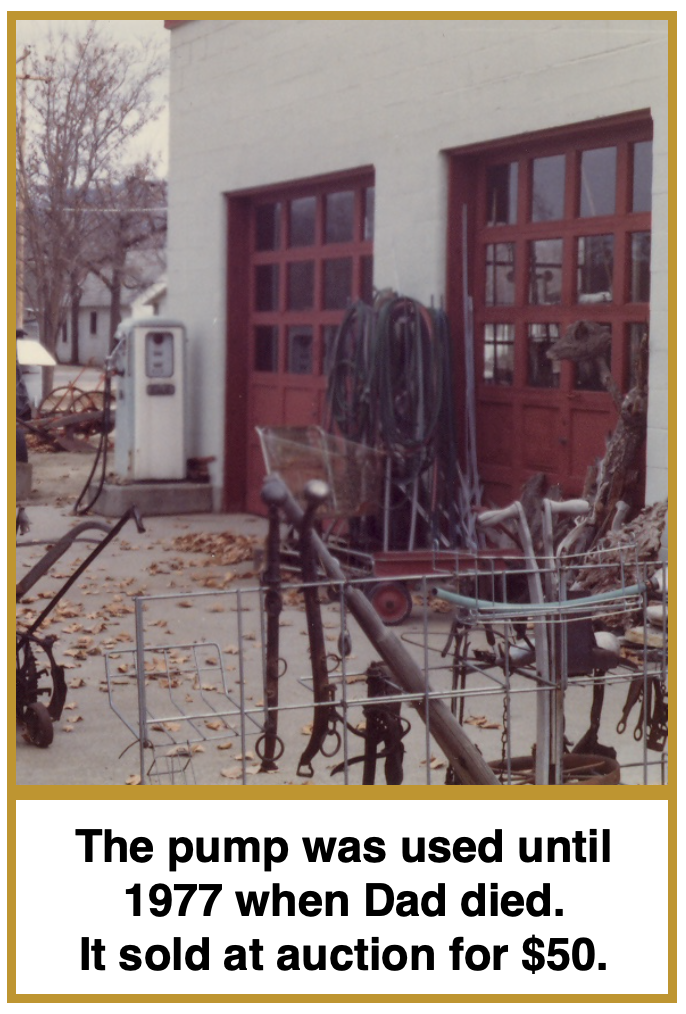
Since we rented tractors by the gallons of gas the customer used my dad decided he needed an actual gas pump to do the measuring. This was when I was six or so and I have no idea how gasoline was measured before dad found a used pump and went about installing it.
Acquiring the pump and getting it installed happened when my mother took my two sisters and I to see Aunt Carol in her new place on a farm outside of Hillsboro, Oregon. Being 1953, US Highway 30 was a miracle of modern Federal construction — two full lanes wide, paved, with no railroad crossings, and the same signage from coast to coast to guide our way. Yes, there were local speed limits through every town and lines of cars behind every truck struggling to grind its way to the top of every hill. But sometimes the highway was even three-lanes wide so cars could pass trucks on steep grades!
When we got home from Aunt Carol’s I was shocked to find a modern gas pump sitting at the end of our house. It was modern in that it ran on electricity, showed gallons pumped, the price, and it had a little twirly thing in a bulb full of gas so you knew gas was flowing to twirl the twirly.
I had no concept that you could have your own gas pump at your house. Even the idea was cool!
During our absence dad found the used pump, installed it and ran underground pipes to two above-ground tanks he had installed some twenty feet to the north.
I got real good at using that pump. First to measure how much gas our customers used (for renting tractors we charged $5 for the first gallon, $4 for the second and $3 for all after.) Later I took it for granted to keep my parent’s cars topped off before heading out on teenage adventures.
Now, six decades after returning from visiting Aunt Carol and finding a modern gas pump attached to our house, one thing still dangles in my heart about that day — scratched into the concrete anchoring the pump, was the date dad had built the pump’s foundation. And the word, “Alone.”
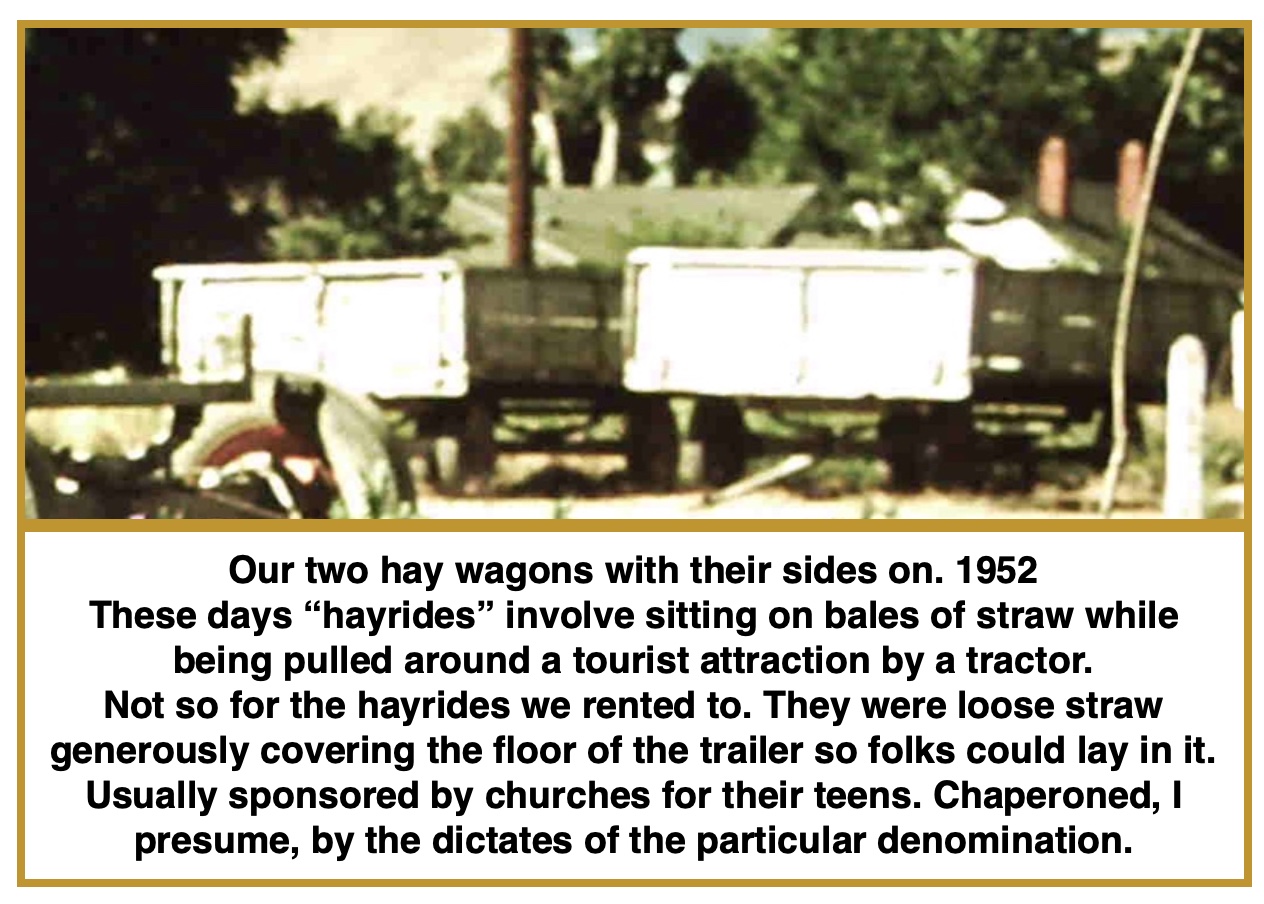
Cleaning out the hay wagons was one of the earliest chores I remember helping my older sister with. This happened after the large, four-wheeled trailers had had their wooden sides attached and had been rented out for something called a “hayride.”
Later I’d come to understand the allure of these evening rides to a country picnic and bonfire and an even later and much more quiet ride snuggled in the hay on the ride home. At the time I only knew to be careful with the pitch fork, which was longer than I was tall, while climbing over what to me were the towering sides of the trailers.
My sister made sure I would give the forkful of dry straw a good shake before tossing it over the side of the wagon. The goal was to toss the straw with enough gumption so it landed in the property’s barrow pit instead of right next to the trailer.
Dad, and later we kids, would always push the wagon next to a borrow pit before cleaning it out. Later, when conditions were right, Dad would burn the straw, cleaned the pit while ridding ourselves of the leftovers of satisfied customers.
And just why had my sister made sure I gave the pitchfork full of straw a good shake before tossing it over the side of the trailer? Now that you’ve asked, I’ll tell you the anticipated joy we kids felt when someone had rented the trailer for a “hayride.”
It seems there were folks on those hayrides who did not pay attention to what was in their pockets. As I said, I would eventually learn about those distractions. But when we were armed with pitchforks we kids discovered there was always some change falling out of that straw—sometimes even a whole dollar’s worth!
Our folks never had to coax us into cleaning up after someone else’s hayride.
My folk’s rental business included two large hay wagons. Because they were four-wheeled trailers the front tires were articulated, so they turned as the tongue of the trailers were pulled into a turn. First by hand-pushing the trailers with my sisters and later by backing them with a tractor or car I got quite proficient at the reverse- of a reverse- steering it takes to maneuver eight wheels, with four of them able to turn, into a parking space.
To my boyhood mind another fascination with these trailers was the wire that came from each wheel. Each wire attached to a cable that ran along the center post of the trailers’ undercarriage to the tongue of the trailer. On the tongue of the trailer this cable was anchored to a second part of the tongue that slid an inch or so back and forth over the section of tongue that was attached to the trailer’s undercarriage. This second part of the tongue attached to the vehicle pulling the trailer.
Dad told me these wires and the sliding tongue controlled brakes for the hay wagons. Even after helping dad replace the break shoes I never really believed those flimsy wires and little bit of a sliding tongue would make any difference in controlling a trailer.
My dad died in 1977, when I was 32, and that summer we were getting the property ready for an estate auction. Among other collections were five large stacks of wood. My dad always liked big roaring fires in our home’s brick fireplace and our cabin’s cast iron Franklin stove, so he had plenty of justification for an ever expanding accumulation of wood. Previous woodpiles had made great forts when we were kids.
In 1977 I had no fantasy of cutting all that wood and moving it to the mountain cabin but there were two randomly piled mounds that had already been cut down to the sizes that were useful at the cabin. It seemed practical and an honer to Dad to load up one of our big hay wagons and get a last load of wood to the cabin, so I recruited my friend Andy Venn to help out.
We attached one trailer’s high sides around the flat bed of the wagon and began pitching in chunks of wood. I don’t remember it taking long at all on a pleasant spring day. Getting in the trailer, tossing them down and stacking them beside the cabin’s porch was just as rewarding.
The thing I remember being completely surprised by was the trailer’s breaks. I expected the big V-8 engine of my 1962 Mercury Monterey to pull the grade from Lucky Peak Dam to Highland Valley Summit, a climb of 922 feet in 4.4 miles. No problem there. It was the even steeper grade down to the Mores Creek Bridge, 527 feet in 2.6 miles, that I had been dreading. All that weight pushing against the car, and all that weight pushing the trailer to the side and around the brakes of the car if the tongue were ever so slightly out of true was a disaster in the making. It worried my mind.
It turned out I would never have known that trailer was following me down that hill if I had not attached the tongue to the car myself — and, of course, if I had been able to see anything but a wall of trailer in my rear view mirror. There was never the least bit of the trailer pushing on the car. Nor were there any lunges back and forth because the brakes were setting too strong, holding the trailer back until the car pulled the brakes off and the trailer ran forward pushing the tongue of the trailer into the car. Rather, that steep descent was as smooth as pulling a trailer on a level road.
Hay wagons get heavy, dear reader. Whether loaded with alfalfa, furniture, kids on a hay ride or stacks of wood. I had never thought about the need to break heavy trailers. Nor had I appreciated the clever and perfectly adept way those old timers had mechanically solved a serious problem.
When working on a tractor there is always a need to use a tool. Usually a simple plier or screwdriver or piece of baling wire can patch a problem enough to keep from having to run to the shop.
As I got older it came time for Dad to keep me entertained, even when he was working with one of the two tractors we rented out. And it was evident that, with the clutching and braking and wrestling the unpowered steering wheel of a Ford N series tractor, there was no holding me on his lap.
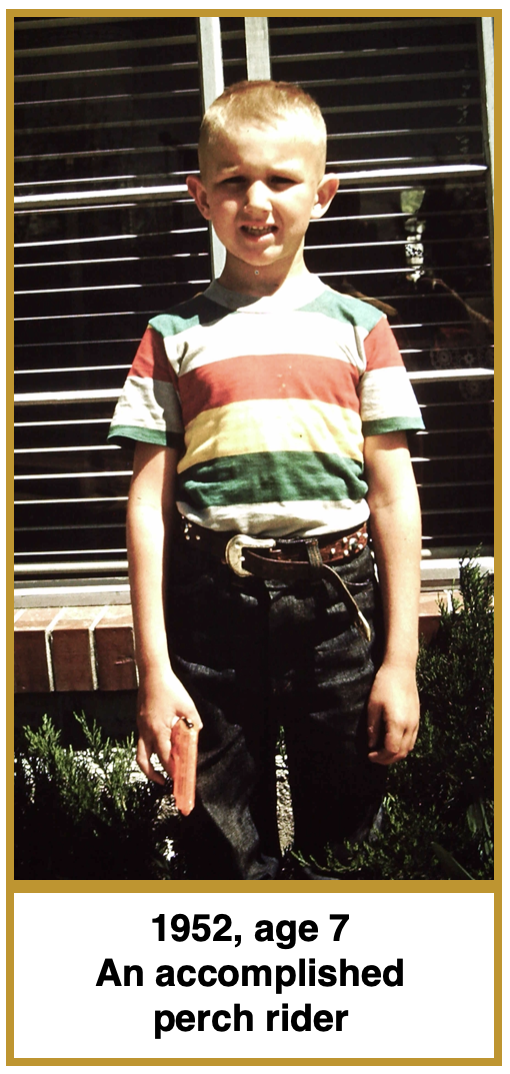
And that is why one of my first memories is perching my scrawny butt on a narrow tool box on a big fender that kept my little ass from scraping on the big left rear tire of dad’s tractor.
There was an ever-present odor of grease and oil and gasoline and hot engine up there. To this day I think of those aromas as the smell of my dad.
The tool box was the highest I had ever ridden, atop that big tire looking out at the moving world with just air around me. It was nothing like being shut up in a car. The road or ground was right there moving beneath us. And when Dad was plowing or mowing or leveling or disking, the action was churning just under my feet. It was endlessly fascinating to see what Dad was doing to the dirt or the grass. And more than once I terrorized myself thinking how that plow or mower or leveler or those disks would maul my bones into the scenery should I fall off that bit of a tool box as the tractor bounced and tugged and struggled at its tasks.
Which I suppose is why I absolutely always had to have my arm as far as I could reach around my dad’s sweaty chest. No being cool and hanging on to the top edge of the fender, my body arched back and my hair blowing in the summer wind like a carefree movie star sitting atop the back seat of a convertible.
Not that I minded hanging on, even as I got older. It was never a solid ride up there and I was glad for the hand hold. And I’m sure my arm around him made my dad confident he’d know to stop the tractor before any mauling in case my hinny suddenly slip off that bit of a fender perch.
When Dad got his first Ford tractor he spent one afternoon driving it out to my mother’s grandparent’s farm south of Ustic, Idaho. My mother’s aunt Ellen had been raising her three children on that land since her husband died some thirteen years earlier at the age of forty.
Ellen led a hard life, scraping together enough egg and milk money to feed her growing kids. Her daughter Dona tells me Ellen made their clothes out of feed sacks, the unworn edges of sheets, and what good scraps could be salvaged from ragged adult clothes. Her mother was so good at combining the different patterns that Dona considered her dresses to be the prettiest in the school.
The farm had a large garden to grow the food the family would eat through the coming year. Every spring the garden needed to be turned over, raked level and prepared for planting. Dona’s older brother and sister pushed a wheeled hand plow through the dirt to break it up and the whole family got busy raking and leveling the ground for planting. It was days of back-breaking work.
And that was why my dad drove his new tractor mounted with a plow way way out in the country. The rest of us arrived in our Frazier Manhattan automobile pulling a trailer with a disking implement on it.
Dad sat on his tractor pulling the plow through the garden. It dug deep, breaking up the soil and turning it over so the remains of last year’s crop were turned under to compost into the land. Then he sat on the tractor dragging the disc, a series of circular blades that broke up the clumps of dirt left by the plow and leveled the deep ruts the plow had left behind. The job was easily done in an hour.
Years later Dona told me she and her sister and brother had watched that man they did not know sitting on his tractor. “We knew he was showing off. BUT WE WERE SURE GLAD TO HAVE ALL THAT DIRT TURNED OVER!!!!!!”
(A note: My mother’s grandparents on her dad’s side were Eric and Johanna Dahlberg. Their daughter Ellen married Earle Officer in 1925. Their daughter Dona married James Saad in 1956.)








 Deans Great Wahoo