Category Archives: Hitchhiking

Frost Valley #11: Loving Bud

I first settled into the Frost Valley estate thanks to a bright-eyed boy.

It was getting late in the day as I walked the valley’s tiny mountain road when a big GMC Suburban passed. It passed half way through the meadow I had just come into when it stopped and a schoolboy jumped out and went running across the meadow into a cluster of buildings. Before I had time to cover fifty yards the boy was in a jalopy, pretty much just a car frame with a motor, and was headed my way. He drove right up and started chatting. His name was Bud. The Suburban was Frost Valley’s school bus. His Dad had been driving it. His Dad was caretaker of the estate where they lived. His Dad could use some help with spring cleaning.

Wintoon lodge

I decided to back track to just before the meadow began, found a wide enough spot to sleep between the road the the “No Trespassing” sign, and settled in for the night. The next morning a International Harvester Scout with a “Constable” sign in the window stopped and Stan, Bud’s Dad, got out. We hit it right off and he suggested I stop in for a hot breakfast (Well, yea!). Sure enough, the local guy who had been helping in the spring was off to school and Stan could use some help with spring clean-up.

Bud and I became good friends that summer. I was an exotic, traveling stranger with stories to tell. He was a spirited kid, probably thirteen or so, and rather isolated in the forest of the Catskill Mountains. We went for walks in the woods and played board games and pool on the family’s pool table and filled our time together with a comfortable enthusiasm for one another.

One day he said he wanted to learn to swim and his mother Lola suggested I teach him in the pond that ran behind the little barn I was sleeping in. It was early summer but mountain water is mountain water — the pond came to my crotch and my legs were freezing. But poor Bud was laid out immersed in the icy existence as I held him on the surface and tried to explain floating and swimming. The entire attempt did not go well and did not last long.

Another Bud & Dean fiasco was my fascination with the brand new invention called a Space Blanket. I was hitch hiking with a heavy woolen World War II Army surplus bed roll and the idea of carrying bedding that weighed an ounce was heaven to contemplate. We were landing on the moon that summer, 1969, so this miraculous material from the space age must live up to its hype, right? Its super-shinny surface reflected body heat so well, there was no need for bulk. The thing had the heft of shrink wrap.

What could go wrong? So, Bud and I set off for an overnight hike up 5,900-foot Slide Mountain with full confidence in my new, light-weight pack.

Well, folks, Space Blankets might make an adequate ground cover, but I assure you they do not keep you warm. Or even isolated from the wind. Unlike being immersed in a cold creek learning to swim with a warm house and dry towel close by, this time Bud and I were in a dark forest in May with a flimsy piece of plastic over us, bundled in our clothes and shivering next to one another to keep warm.

As spring gave way to summer, the chores around the estate settled down and it was time for me to get back on the road. I had gotten close to Stan and Lola and Bud and was sorry to be leaving, and I knew Bud would take it hard. I told him first, the both of us sitting on the ground beside the compound’s workshop. He began to cry and I wanted to. I put my arm around his shoulder and we sat there for a good long while.

That night at the dinner table I told Stan and Lola I thought it was time to move on. Again Bud quietly broke down. It was a very awkward moment for all of us until Stan mentioned the movie Hud and said it was about a relationship similar to Bud and I. That went a long way to ease the discomfort.

I did leave soon after and will be telling the story of my return, my spending the summer, and Bud getting over me enough so when autumn came and it was time to move on for good he was able to say goodby with a twinkling-eyed smile. A smile I carry in my heart to this day.

Cape Cod #6

It is amazing to me, but I remember only two tiny snippets of hitchhiking back from Cape Cod, Massachusetts, to the Catskill Mountains of New York.

One snippet is Boston.

My main rule in hitchhiking was to avoid big towns and cities. I didn’t like trying to catch rides in traffic and for the most part had no interest in witnessing how one big city handled tying streets together versus how another did the same thing. But Boston was different. Boston is so tied to the history of the United States I wanted to get the feel of the town. And, having been a Unitarian Universalist since high school, I wanted to check out the first church (founded 1620) in the English American colonies. Yep. It’s Unitarian.First Church

How did I make it into and out of that city without remembering a ride or standing on a corner with my thumb out or any other detail of dealing with a world capitol? How did I spend two nights there without remembering one bed or couch or beer or bar? (The only way I know it was two nights is from reading it in a letter a friend saved.) All I remember is a view of the lawns and trees of Boston Commons rolling off to the north west, filled with students studying and chatting. And looking at First Church from the outside. I don’t even remember if I tried the door to see if it was openLeslie Williams public domain 2014 small

Having left Boston, I do remember it beginning to rain as I crossed the Hudson River from Massachusetts to New York. And raining harder as I got closer to Oliveria Road, the tiny mountain meander that passed over the Catskills and wound down Frost Valley. I don’t remember the ride (or was it rides?) over the mountains, but I remember the rain coming down harder. And when I got to the Frost Valley estate I had spent the summer on and let Stan the caretaker know I was back, he told me a hurricane had hit Cape Cod and the rains were headed our way.

For not remembering much about my return, I distinctly remember my disappointment at having missed the opportunity to go through a hurricane. Had I known Gerda was on the way I would have stayed on the Cape for the 5.6 inches of rain.

Hum. “Had I known.” — So THATS why people listen to the news !

Cape Cod #5

The big event snuck up on me.

It turns out I arrived at Provincetown, on the tipy tip of Cape Cod, on the Thursday of Labor Day weekend. The place was busy but, it turns out, it was just gearing up. By Saturday what had been crowds were mobs.

And then the Great Abandonment began.

Sunday lunch was as busy as Saturday had been. By six o’clock there was room on the sidewalks. I figured it must be dinner time so most folks would be off the streets.

The hustle and bustle Monday morning was half-hearted at best. Then, hour by hour, Provincetown became more lonely. By five o’clock many shops had put out Closed signs. By seven even the gay bar was empty.

A gay bar ? Empty ? Come on now …

Tuesday morning the grocery store was open. And the gas station. There were no cars in the street.

Closed signs had added For The Season. The bustling burg had pulled up the covers and closed its eyes. The winter nap was neigh.

I had never been in a resort town on closing weekend before. Wow.

framed

Cape Cod #4

If you’re fond of sand dunes and salty air

Quaint little villages here and there

You’re sure to fall in love with

Old Cape Cod

The song Old Cape Cod had me looking forward to an enchanting, tiny sand dune tucked into the lapping sea.

If only!

Once I got across Massachusetts I started up Cape Cod. For sixty miles I didn’t even see the sea!

Apparently there were quaint little villages here and there, but they were on the Atlantic Ocean and Cape Cod Bay, not along US Highway 6. Today a freeway for half the distance of the cape, in 1969 Hwy 6 was a two-lane affair running smack up the middle of the massive sandbar.

The only tiny things I noticed while hitch hiking Cap Cod were the short little rides I got from summer home owners heading back from whatever chores were keeping them in a scurry.

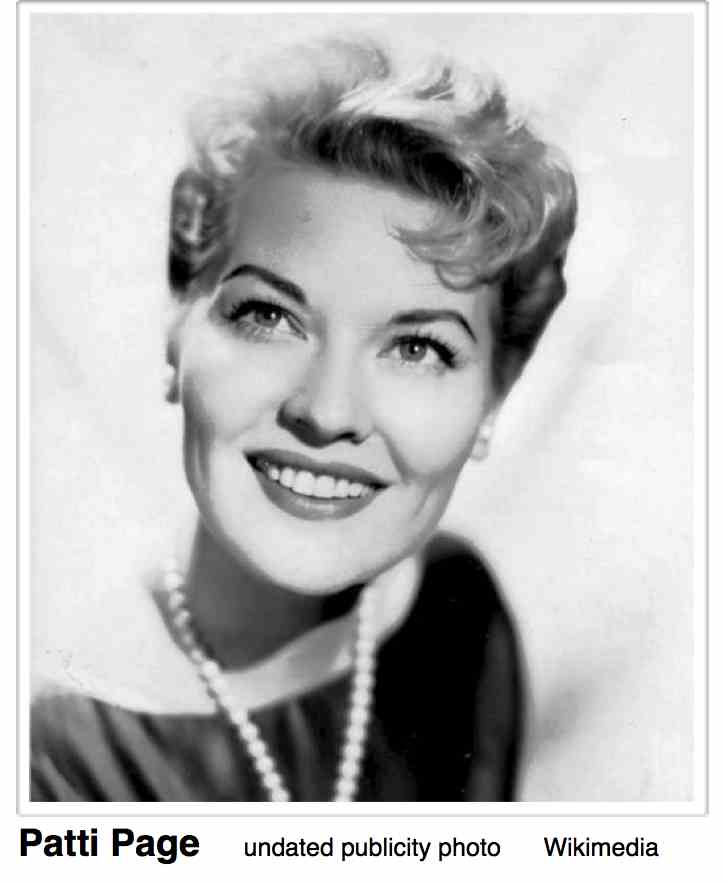
Yet I was rewarded—at the end of those sixty miles was Provincetown, the enchanted town Patti Page had promised.Entering Provincetown w

Provincetown, right at the very tippy tip of Cape Cod, was, indeed, a quaint little village. Yes, it was filled with good looking tourists in bright colors carrying every sort of beach paraphernalia one can imagine. It was busy. And it was quaint.

As busy as the town and the grocery and the shell shops were, they were roomy compared to the gay bar.

Which was perfect for me!

What can I say? I was young and tall and carrying a pack. Finding a place to crash was no problem at all. And, folks, after months of the agrarian beauty of living in an isolated Catskill Mountain retreat, I was ready to pursue some lust!

Before long I was invited to a most fun and accommodating crash pad. For three days I was out every day enjoying the sun and sea and dunes and salty air.

As for the nights? Well. My host was most accommodating. You’ll have to wait for the book …

Cape Cod #3

It was early to rise the morning after sleeping in an unknown military barracks somewhere in Connecticut or Rhode Island. The handsome guy who had offered me a bed gave me a ride back across the border to Massachusetts and a highway heading east. I stuck out my thumb.

Massachusetts is a long state, some 250 miles west to east, but I remember nothing about getting through it. No hunger pains. No particularly long waits. No particularly memorable rides (as long as you don’t count the three fast-driving, heavy drinking party jocks who pulled up in a convertible. I didn’t feel safe refusing a ride, so I joined the guy in the back seat, held on, and shut up. Fortunately I was too boring for them to put up with and they soon told me they were turning off the highway. I was glad to say thanks for the ride and once again be alone, terra firma solidly under my feet). Patti INT

The only reason I had lit out across Massachusetts was a Patti Page song. In 1957 Patti put Old Cape Cod to vinyl, an act which no broadcast system could resist. Radios treated us to it every hour while every TV variety show had its own black-and-white set of a seaside restaurant to feature their star crooning —

If you’re fond of sand dunes and salty air

Quaint little villages here and there

You’re sure to fall in love with old Cape Cod

Patti continued —

If you like the taste of a lobster stew

Served by a window with an ocean view 

You’re sure to fall in love with old Cape Cod

The song put Cape Cod on tourists’ maps.

Twelve years after Patti first sang of quaint villages and salty air, the song was still stuck in my head. I followed it east, to the tip of a long, long state. A tip, it turned out, that was a long, long cape.

One wild ride and being impressed with how long Cape Cod is. Those are my recollections of hitch hiking Massachusetts.

Don’t take my word for Old Cape Cod getting stuck in one’s head. Check it out — https://www.youtube.com/watch?v=HT2ao0rcxoA

Cape Cod #2

I finished my last blog telling about coming upon the Rip Van Winkle Bridge across the Hudson River some 120 miles north of New York City. 2005 BLOG

Besides it being free to walk across a foot path on the right side of this mile-long toll bridge, I finished up commenting on being fascinated by how far above the river the bridge is, how wide the river is, and how green the Hudson River Valley is.

But mostly I was fascinated by the fact that the Hudson River was FLOWING THE WRONG WAY ! !

It was flowing NORTH !

Over and over I worked my understanding of geography in my mind.

Over a hundred miles to the south I had seen the Hudson River connect with the Atlantic Ocean at New York City. Yet here I was on the south side of the bridge and the river was flowing first under my side of the bridge and then under the roadway!

Surely the river does not flow from the Atlantic up to the St. Lawrence Seaway ? ? ? It just couldn’t be. I knew there were differences between the East and the West in this great land of ours, but I was pretty sure the side of the continent did not change the notion that water flows downhill!

Yet the Hudson River was right there, FLOWING UPSTREAM!

I thought perhaps it was some illusion caused by being so far above the water. But as I got to the far shore I checked and sure enough, there were grasses and branches along the shore that were being pushed by the current and they were being pushed UPSTREAM !

Alas, it was getting late and I needed to put that mystery on hold. At the time I needed to  got off the bridge, put out my thumb, and see what shelter may come along.

I immediately got a ride from a young military man who was friendly as could be and, I’ll admit, easy on the eyes.

After the initial pleasantries in his car I was waxing poetic about geography and rivers flowing up stream. He was from the area and explained, “It’s the tide.”

THE TIDE ? ? ? ! ! !

Wow. 120 miles from the ocean and the tide is pushing back the mighty Hudson River ? !  I’m from the mountains of Idaho and had no idea the tide could do that!

He explained that the river continues to flow under the tide and the sea comes rolling over it.

Wow. I’d always heard how mighty the movement of the tides is. Considering all the rivers and basins and bays in the world, that is a LOT of water and land sharing a twice-daily sloshing around with one another!

The power of it struck me just like that — the mighty mixing up of water, earth, heat, cold, light and dark that has brought a carbon-based organic celebration upon this watery rock we ride around the sun!

The handsome military man ended up providing me with a place to sleep in the barracks of his camp.

After being impressed with how effortless it was to get a hitchhiker to an empty bed on a military base I enjoyed a sound sleep of sloshing dreams.

Cape Cod #1

Summer was drawing to a close but in a few weeks there would be chores to do on the Catskill Mountain estate I had come across in 1969.

There was a little time to go exploring and for no reason except having heard Old Cape Cod several thousand times on juke boxes and radios during my life I decided to get out my thumb and head across Massachusetts.

Avoiding freeways and towns as best I could, and conscious of being in the Catskill Mountains, I followed the little black lines on a map to the town of Catskill, on the Hudson River. It must have been a pretty easy journey for I remember nothing of it!

Nor do I remember much of Catskill the town. In fact I probably skirted the town itself, coming in on New York State Highway 23A and approaching the  Rip Van Winkle Bridge on the east side of town.1993 BLOG

What an unexpected treat! Built in 1935, the Rip Van Winkle Bridge is an impressive structure. After miles of forests and fields this mighty steel cantilever bridge jumps the mighty Hudson River some 120 miles from the river’s mouth at New York City. The bridge has ship clearance of 145 feet, a full 14-story building, above the water. Of course, ship clearance is not as far above the water as the bridge is.

On seeing the bridge I found myself calculating how to get across it. I wanted to walk across to check out the Hudson River, but I’d been on many of these narrow cantilever bridges in my day. I couldn’t imagine getting over nearly a mile of such an enclosed structure while dodging cars by squeezing on the side of the decking.

Matters worsened when I got close enough to realize the bridge was a toll bridge, meaning booths with officials that would surely report a backpacker taking off on foot in front of traffic.

But then my heart sang. I got close enough to discover this mighty structure, built to let wheels roll over water, included a walkway — an isolated path all on its own, running on the outside of the superstructure that held the road.

My heart was even happier to discover the toll for walking was free!

I found myself fascinated with several things about crossing Hudson River on the Rip Van Winkle Bridge —

First was how far above the river the bridge is. It crosses from above the bluffs beside the river, not over the river itself.

Second is how big the Hudson River is! Wow.

And, third, how green the Hudson Rover Valley is. Rivers are green in the desert West, but only along a few feet of their banks. Here all was lush.

My greatest fascination while walking across the Rip Van Winkle Bridge I’ll get to in my next blog.


More about the Rip Van Winkle Bridge—

(information from Wikipedia)

• Built by the newly-formed New York Bridge Authority in 1935

• Carries NY Highway 23

• From Catskill on the west to Hudson on the east

• Original cost: $2.4 million (inflation adjusted, $41.3 million)

• ship clearance: 145 feet, a 14-story building

• 5,040 feet long

• Lead paint removed and repainted in 2009

• Includes a separated walkway on the downriver side, closed at night

• Bikes can use the traffic lanes or walkway

• 1935 toll for cars: 80¢ + 10¢ per person up to $1

• 1935 toll adjusted for inflation: car, $13.76 / person, $1.72 / max, $17.20

• Actual 2015 toll for cars: $1.50 / $1.25 with pass

• No toll for walkway

• Yes, it is named after Washington Irving’s short story

Frost Valley #9: A Yellow House

There were two summer homes on the private estate where I spent the summer of 1969, one a few miles upstream from the compound that included the lodge and the other a few miles downstream. INT

Come mid-summer Stan said one of the chores for 1969 was getting the upstream house painted. They had hired a professional painter and since most maintenance chores on the estate had slowed down I could keep busy helping him out.

At the time acrylic paints, those wonders that let clean-up be done with water, were fine for indoor work but no respectable professional painter would ever use them for exterior coverage. They just did not stand up to the cold and water and sun like good oil-based paint did.

So, up Frost Valley I went and cursed to cleaning up with solvents I was.

The painter taught me more our first day together than I have learned about house painting before or since.

First, scrapping is the most important part of the job. (I figured out on my own that scrapping sure makes one glad to be finished with pushing steel over wood and to start painting!)

Second, the house was sided in long slats of wood, about three inches wide, running horizontally across the walls. The painter started off by explaining that if we were using acrylic paint we could paint whatever we could reach from the ladder, square blocks immediately in front of us, and when we overlapped them with the next square block we painted they would blend right in.

But oil-based paint isn’t like that. If it gets tacky or dry and you paint over it it, even though it is exactly the same paint, where they overlap there will always be a different color. So we painted three boards at a time, reaching as far along the length of those three boards as we could, and then we moved the ladder and continued painting those three boards all across the wall. There was plenty of moving ladders that summer.

Third, he taught me to keep the paint on the tips of the brush. Take small dips of paint to the wall and don’t let it get past half way up the bristles of the brush. Painting is so much more pleasant when your hands are not slippery with paint.

And forth, he taught me not to sweat cleaning up. It’s no big deal, especially when the paint is all in the end of the bristles of the brush. Just swish it about a bit in the solvent and flip the solvent and paint off the brush with a good swing of the arm. Two or three swishings and flippings does the trick.

I’ve since learned that with acrylic paint, where you are dealing with water to clean up, just a touch of soap on the bristles when you have finished cleaning them keeps them nice and soft. (I’ve also figured out that disposable brushes are much better than they used to be, but that’s our little secret.)

We got along well, that painter and I, but I do remember one awkward moment—

It was 1969 and I was a young wonderer, not serving in the military. One day I was on the roof, painting the areas under the eaves of a dormer window, when Stan and another local both managed to be spending some time chatting with the painter. They were right below where I was working. The conversation, as often happened that summer, got to hippies. Perhaps out of deference to my being in ear shot, the general tone of the discussion was that for the most part those hippies are OK.

“I will say one thing for those hippies,” the painter observed. “For the most part they seem to like girls.”

I instinctively turned to check that comment out and the painter was looking directly at me.

What does a shy young gay guy do?

I snapped back to my painting and to the rush of anxiety I had been caught up in since my youth when caught off guard about sex. Perhaps today I’d have pursued it with him. Perhaps it is just as well the topic was dropped by everyone.

We painted that house a beautiful light yellow with, as I remember, white trim. It looked real sharp. I was proud to have been part of the job and I was glad to have learned how to scrape and paint.

I’m also glad my home is sided with steel and has never needed my skills.

Frost Valley #8: True Trees & Heavy Steel

Frost Valley was named for a reason and a requirement for the private estate where I found myself being a handy man was two well-stocked woodpiles, one for the main house and one for the caretaker’s place. The caretaker, Stan, had been on the estate long enough to keep an eye out for promising firewood trees.

Once the early rush to keep grass mown and weeds out of the garden began to settle down, the earth in the forests had firmed up enough to get the 4X4 GMC Scout into the woods with a trailer. So we found ourselves tossing a chain saw and pry bars onto the trailer and setting out into the woods on barely noticeable ruts being overlapped with the branches of hardwood forest.

trees & steel photo

I figured we’d be searching for dying trees or gnarly old snags that would beautify the forest if removed, but Stan quickly set me straight. Perhaps such harvesting would beautify the forest, he agreed, but his job was to cut and split wood. And splitting gnarly snags and dying, unpredictable wood was a pain in the keester. Nope. He had his eye on the healthiest, straightest, most handsome trees in the forest—two or three he’d been eyeing for several years.

And handsome they were. Perhaps Elms? No matter. They stood straight and strong, with no branches for a long way up the trunk. I ended up appreciating that last detail.

It seemed a shame to me, chopping down such beautiful trees, but down they came.

In a surprisingly short time the first load was cut into foot-long sections, just right for the estate’s stoves, and loaded on the trailer. We hauled them to the shed area of the estate’s main compound, dumped them on the ground, and went back for more.

It would have taken less time if the final load had come out as easily as the rest of them. As Stan parked the Scout in the best place to pick up the last load he expressed concern for what looked like a soft spot in front of the Scout. But after testing the spot with his toe he figured it would be “OK.” Once the wood was loaded and the tools were in the back of the Scout it took only twenty feet for the weight of the load to turn “OK” to “creamy mud.”

Getting out to lock the front hubs of the Scout left us squishing in our socks. The granny gear and the four wheel drive just meant four wheels were digging in rather than two.

We cut our losses and walked back to the compound to get the tractor.

Next came the splitting—whether the logs we had just harvested or the dried harvest from the year before I don’t remember.

I do remember being taught how to split wood. First, to take the time to simply look at the cut end of each piece. Find the places it wants to be split. They are easy to find once you look for them—little cracks, usually around the edge, where the wood is already splitting. Then get the heavy maul high overhead and put most your effort into getting the sharp edge as close as you can to the little crack you’ve chosen. Yea, there is some effort put into the power to drive the maul through, but mostly gravity and the heavy steel will provide the oomph. Getting it where it will do the most good is what pops that wood open and sends two pieces clattering across the ground.

There is, of course, one other secret to splitting wood, and it is the secret that will keep you from having to twist and pull your maul out of a piece of wood that didn’t split. While reading the wood check the sides of the log for knots, the places where branches once were. You can split wood with the knot coming out the left or right side of your split, but no matter where the little cracks are running, if you try to drive your maul through a knot you will be putting more work into extracting the steel than it takes to split a dozen logs that pop right apart.

Trust me, I soon came to appreciate Stan’s insistence on trees that were straight and true and who’s branches (meaning strong knots) began way up the tree.

I was not a very strong guy, but I am six foot four, so by the time that maul smacked into those hardwood logs there was plenty of travel in that steel. I got to where I could split wood with the best of them and was surprised at how quickly those trees were turned into cords of split wood.

I can’t say as I’d want to make a living at it, but to this day I enjoy splitting wood. There is something very satisfying when the halves go flying several feet in two directions, as if the wood is glad to be liberated from itself.

Frost Valley #7: Hippies & Women

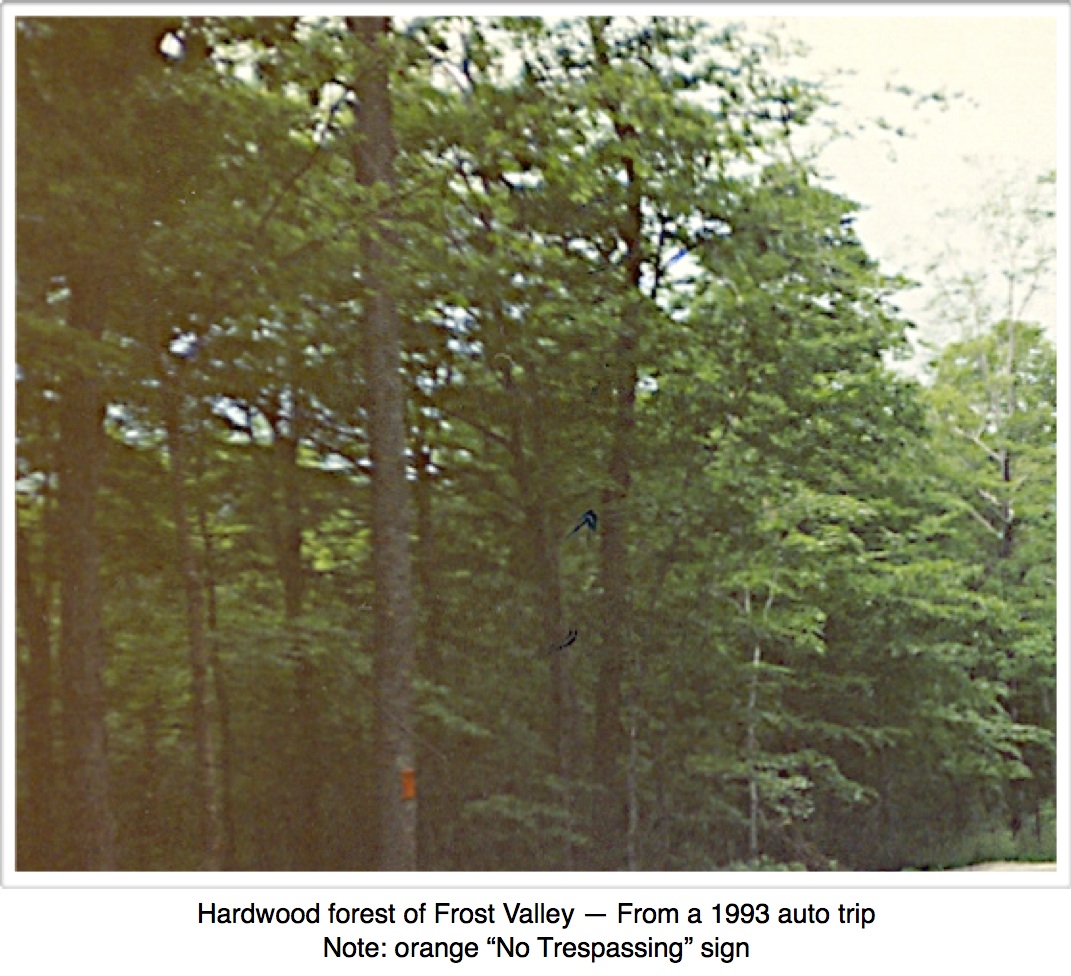
During my stay in Frost Valley, there were a few times Stan and I would run into folks who ignored the No Trespassing signs and pulled off the road to park beside Clear Creek for a picnic or camp-out.

One night we were driving back from a meeting of the volunteer fire department in Claryville when Stan impressed me by noticing some bent grass beside the road. Sure enough, following the tracks just past the willows we came upon a car. We kindly let the occupants gather themselves before politely letting them know they’d have to move along.

Another night Stan brought the Scout to a screeching halt in front of the barn I was staying in. The urgency in his voice startled me and I jumped up when hearing he needed my help. The Scout kicked gravel as we sped to the caretaker’s house, where Stan ran in and got his sidearm, something I had no idea he had. Then we were off, speeding down the valley while he explained he’d come across a bunch of hippies camping on the property and there were lots of them and he needed my backup while controlling the situation.

We have to remember, this was 1969. The battle of Vietnam was being fought on the home front as well as in Asia. Lines were drawn between long haired hippies and decent society. Both had their fears of one another.

Well. Stan knew I was something of a hippy. Even though I had cut my hair short to avoid confrontation on the back roads of America, I was, after all, hitching about the country and not in the war.

I don’t remember much about that fast ride a few miles down the twisty road, but I do remember keeping a calm voice and trying to mellow the situation out—all the while hoping we did not run into a camp of armed jackasses demanding some claim to camping that the State of New York did not grant them.

We got to the little service road leading to the hippy’s hidden spot and turned in. The camp had been picked up and their vehicles were in the last stages of being packed. Perhaps thanks to my being there Stan was able to see there was no threat coming from these young people in clothes that harkened back to our great-grandparents.

Stan ended up apologizing for having to kick them off the land and then explained there were public camping spots up the valley, owned by New York State. By this time it was dark and Stan continued, “You might have trouble finding the turn off. Follow me. I’ll take you there.”

My heart sings to this day, thinking of Stan jumping the divide that separated our nation.

Shortly after the hippy incident, we were in the Scout checking out the property when Stan observed, “You know, Dean. I’ve noticed. Every time I have to kick out hippies they always clean everything up real good. I never have had to pick up one scrap of anything. But these damned middle-aged women. They seem to think they can leave crap all over the place and everyone else should clean up after them.“

I quit worrying about hippies getting hurt in Frost Valley.