Category Archives: Idaho

My Folks #16: 30th Street #4, Needing Room

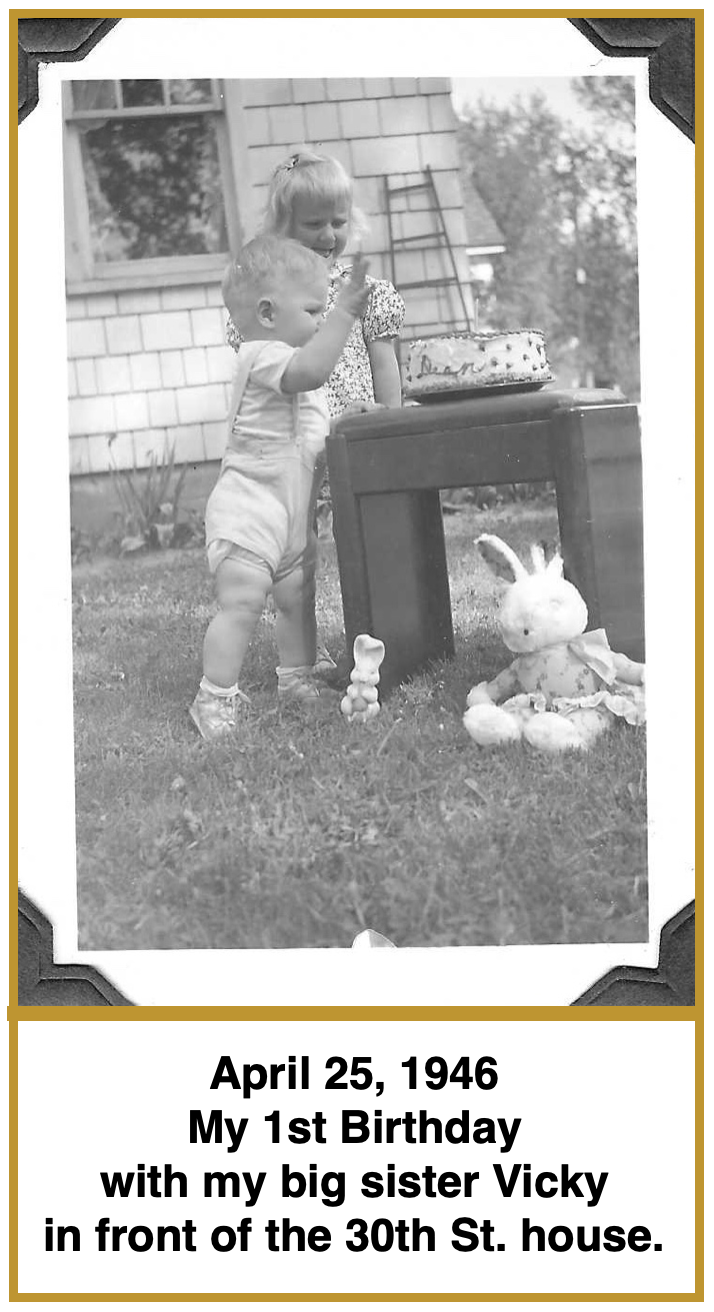
By 1946, with my sister being three and myself having survived my first year, our tiny little house was getting snug. At the same time thelot across the alley had no more room for our expanding fleet of trailers. 

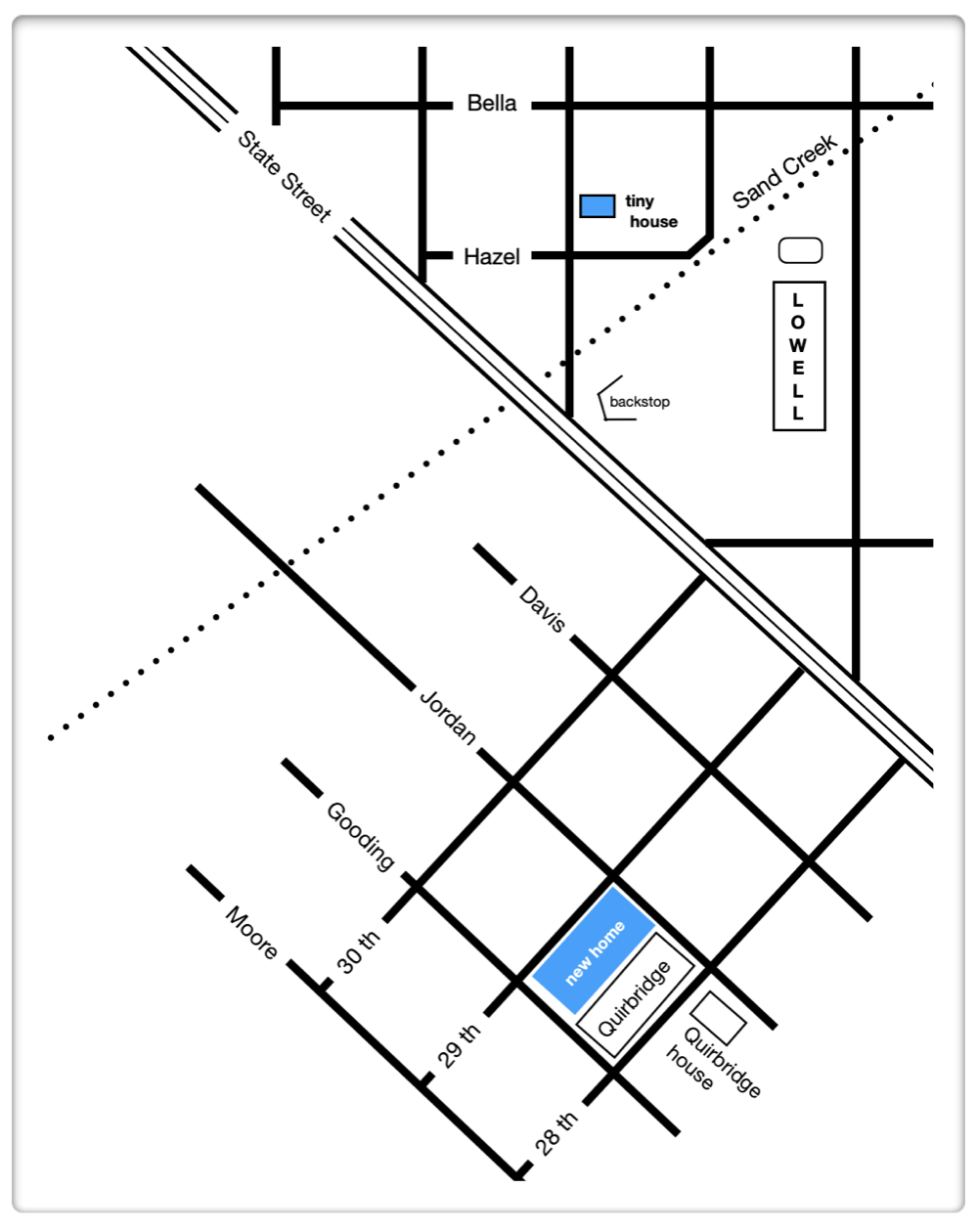
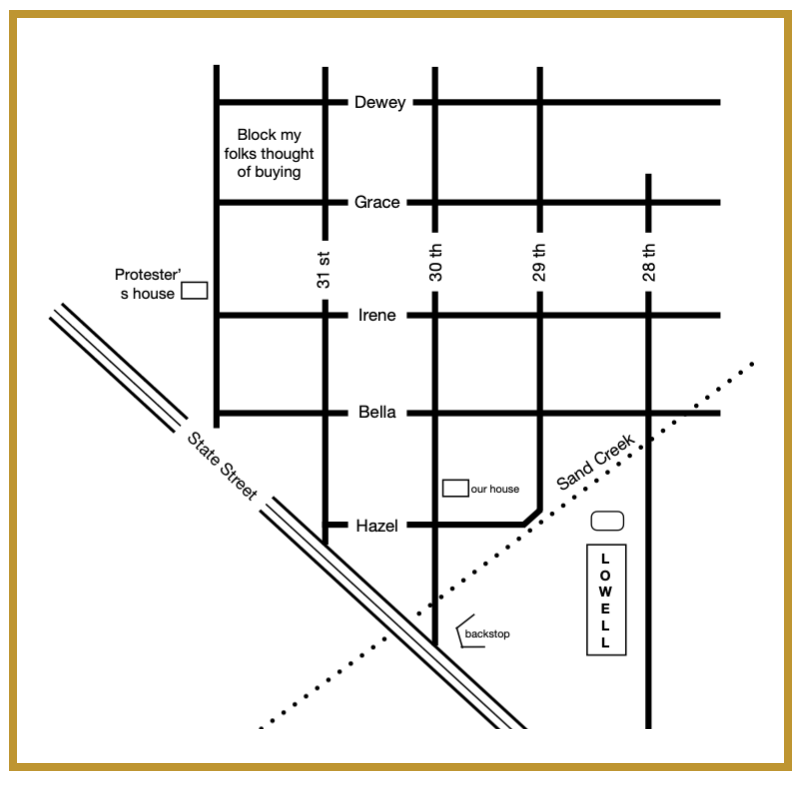
Two blocks north of our house on 30th Street, the block between 31st and 32nd Streets sat empty. It would sure be easy to move to.

It was a fine, flat patch of land perfectly adequate for my folk’s needs. It was in Boise City’s boundaries so was blessed with paved streets, fire and police protection and sewers to whisk our cares away.

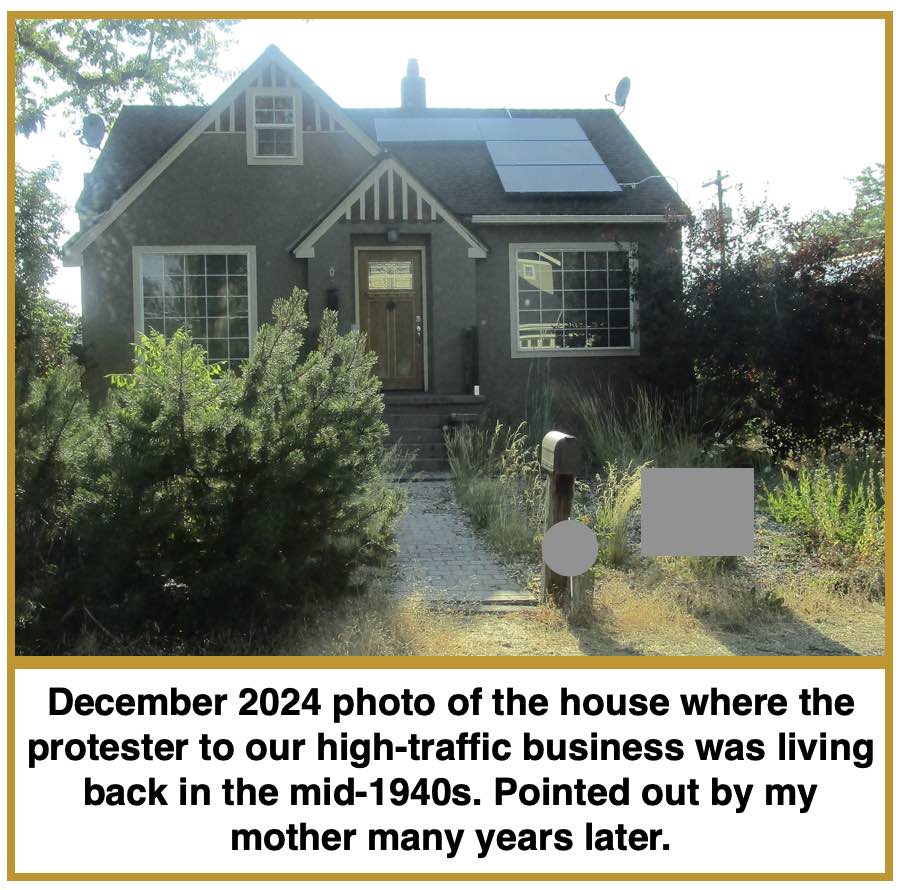
It was also covered by Boise City rules, one being that neighbors could express their opinions about a business moving in next door. Years later my folks pointed out the home of the lady who thought the traffic, noise and dust of renting trailers would be too noisy, too much traffic and too much dust.  My folks had to agree but it did end their plans. They found another local some seven blocks away, south of State Street.

Screenshot

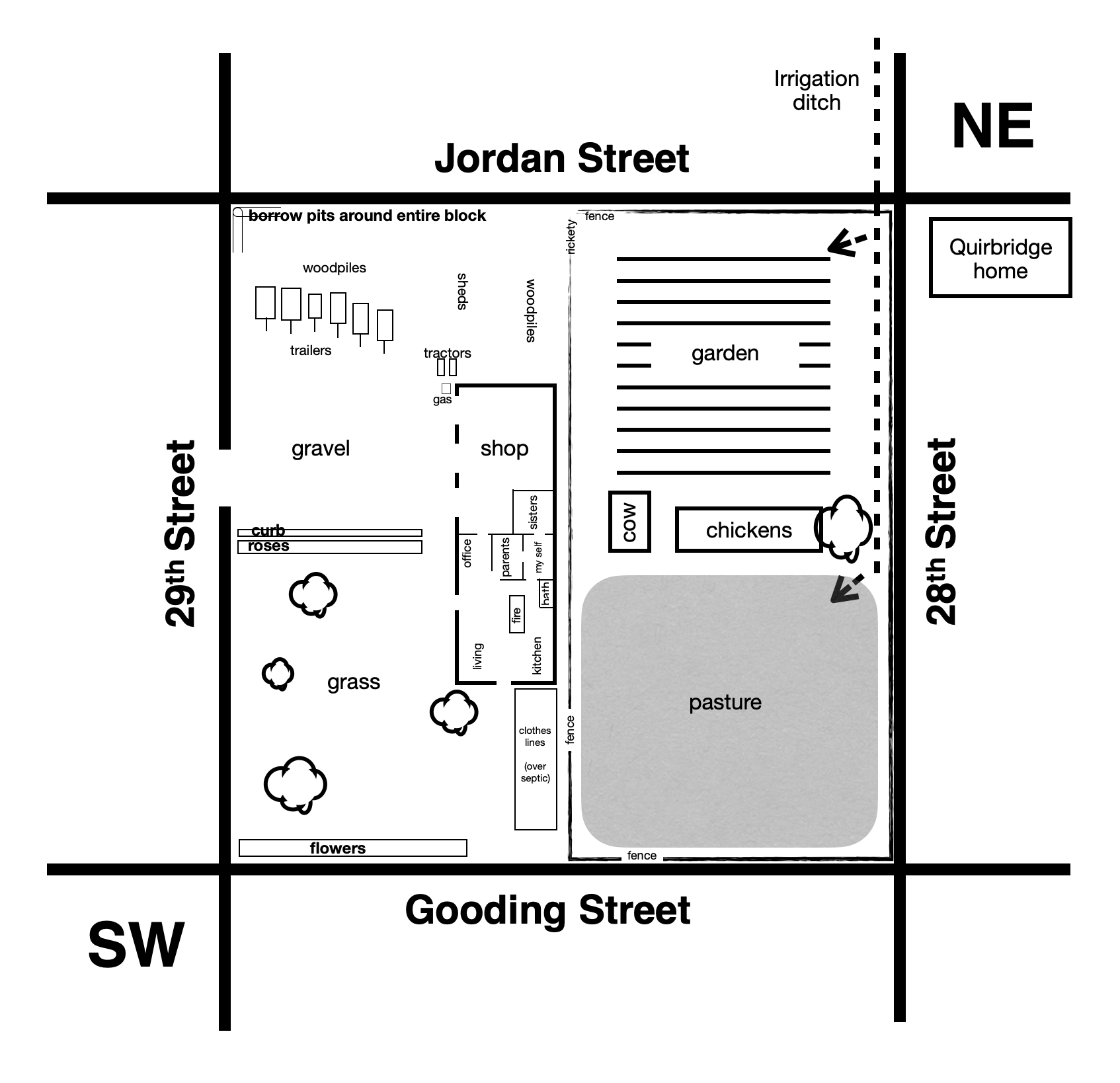
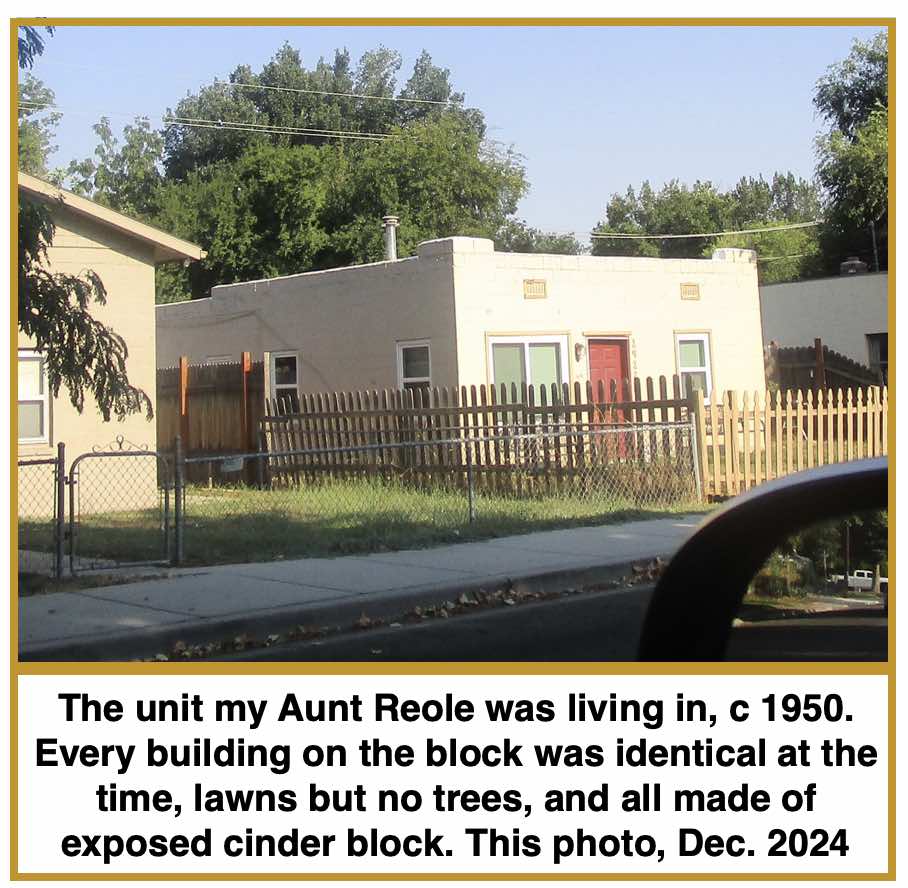
After we moved from 30th Street the block my folks were eyeing for their business was filled with buildings even smaller than our 30th Street house. They were twelve freestanding buildings, made of cinderblock and all identical. Lined up in two rows, six were facing 30st Street and the other five had a view of 31st Street. 

At one time one of those buildings overlooking 31st Street was rented by my dad’s sister Reole and her handsome husband Earl. When I was six or so we visited Reole, Earl, and their sons Rodney and Craig at their home. 

Screenshot

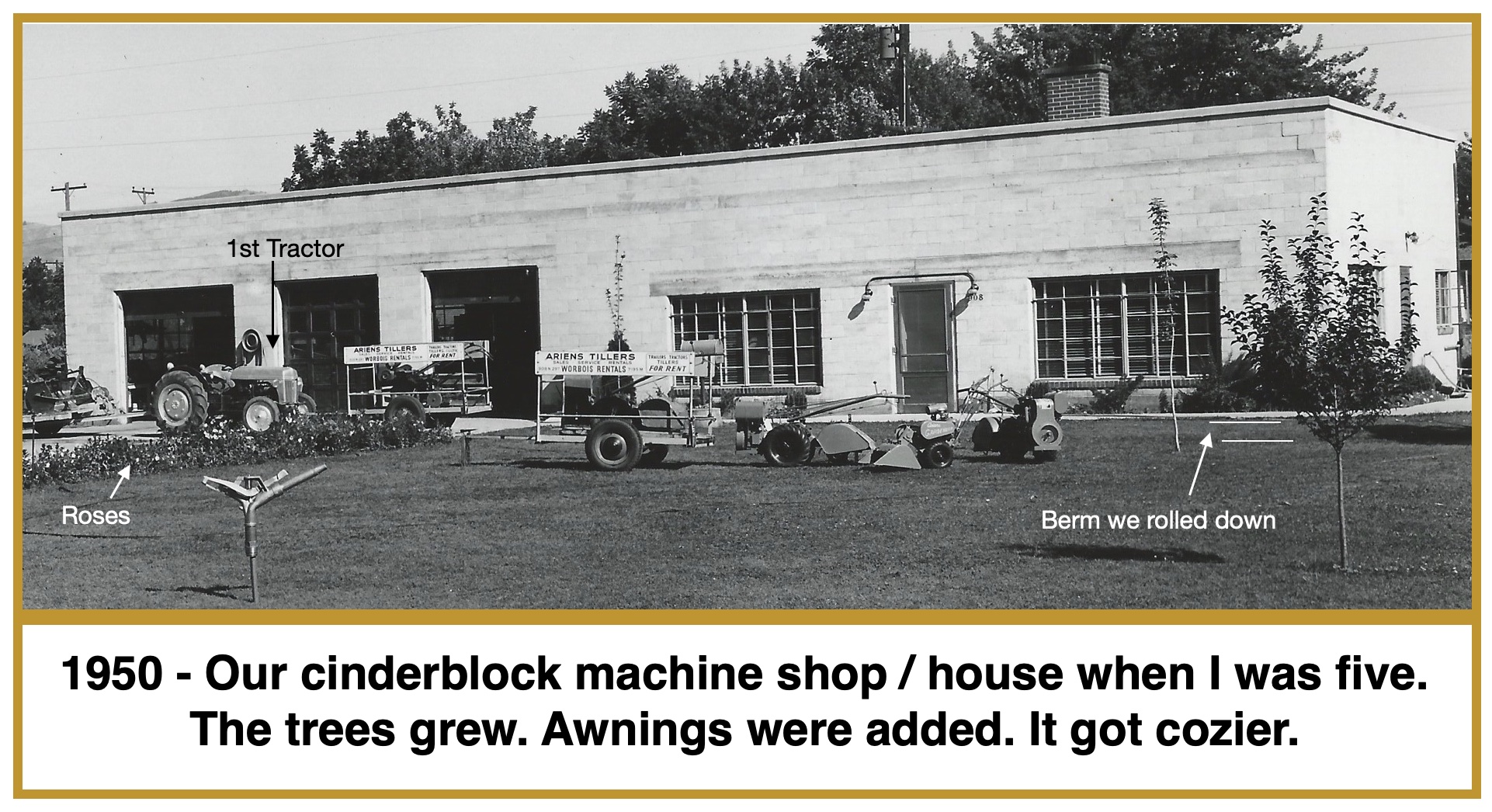
At the time we were living in a cinder block house and I had a legos-like toy set made up of cinderblock style pieces, so I identified with the life style. I vividly remember those cinderblock buildings standing alone on that otherwise empty city block. Now, in 2025, the buildings are still in use but there are carports, trees, awnings, and other additions making them much more cozy

Atlanta Idaho

My dad’s mother ran a laundry in remote Atlanta, Idaho, in the mid-1910s. My dad’s memory of those three years resulted in my sisters and I being drug to Atlanta, the associated local towns and over the Sawtooth Mountains all through the 1950s.

Dad had photos from his kid hood in Atlanta as well as 400+ photos from our horse camping trips in the Sawtooths. (There was no lightweight camping equipment in the 1950s)

I was headed to Atlanta in 2025 and created a photo book of stories from the 1910s and 1950s. While there I learned more history and had some adventures — including being the last bloke rescued at the Rescue Cabin between Atlanta and Rocky Bar (see pages 17 and 40-43).

GET BOOKLET includes all three eras, the 1910s, the 1950s, and 2025. You can do a “save as” to get this onto your / device.

It contains all the photos in my booklet. If you want all the 422 photos dad took in the 1950s and all the photos I took on my 2025 trip, email and I’ll get them to you.

dean@greatwahoo.com

My Folks #15: 30th Street #3: Saved by Sis

A year had passed since my mother’s ordeal delivering her oversized baby boy. The black and blue lumps on my head had long since formed into the perfectly formed skull I’ve been blessed with ever since. (That’s my story and I’m sticking with it!)

Screenshot

We were still living in the tiny house on 30th Street. Dad was actively renting the trailer he had purchased to build the tiny house and he was more than happy to stop and chat with everyone who asked about it. In fact, with no credit card records in 1946, he had to chat and get enough evidence so the folks renting the trailer would bring it back.

I don’t remember it but my older sister Vicky does and my mom sure did. Apparently Dad was responsible for watching Vicky and I when he got busy conversing with a neighbor. Or renter. It must have been a very important chat. 

Screenshot

There was an irrigation ditch running through the property, small enough for any adult to step over and any three year old to jump across. And, apparently, just the right size for a one year old to fall into without having the room to roll over and get his face out of the water. 

My sister noticed my laying in the ditch and struggling. Dad ignored Vicky’s frantic cries. So she reached down and pulled me out. 

Thanks, Sis …

There is no record of the reaction when my mother asked about her dripping wet muddy boy but the marriage lasted another thirty-one years.

My Folks #15: 30th Street #3: Saved by Sis

A year had passed since my mother’s ordeal delivering her oversized baby boy. The black and blue lumps on my head had long since formed into the perfectly formed skull I’ve been blessed with ever since. (That’s my story and I’m sticking with it!)

Screenshot

We were still living in the tiny house on 30th Street. Dad was actively renting the trailer he had purchased to build the tiny house and he was more than happy to stop and chat with everyone who asked about it. In fact, with no credit card records in 1946, he had to chat and get enough evidence so the folks renting the trailer would bring it back.

I don’t remember it but my older sister Vicky does and my mom sure did. Apparently Dad was responsible for watching Vicky and I when he got busy conversing with a neighbor. Or renter. It must have been a very important chat. 

Screenshot

There was an irrigation ditch running through the property, small enough for any adult to step over and any three year old to jump across. And, apparently, just the right size for a one year old to fall into without having the room to roll over and get his face out of the water. 

My sister noticed my laying in the ditch and struggling. Dad ignored Vicky’s frantic cries. So she reached down and pulled me out. 

Thanks, Sis …

There is no record of the reaction when my mother asked about her dripping wet muddy boy but the marriage lasted another thirty-one years.

My Folks #14: 30th Street #2 : Birthing This Boy

(originally blogged as My Folks #11: Birthing This Boy – fits in the story here)

I don’t remember the day, but my Mother sure did. April 25, 1945. Five days before Hitler murdered his newly married bride and then shot himself. At 6:25 in the morning, despite Mom’s hard work and interminable efforts, my fat head just would not get beyond crowning. 

Finally the doctors decided to take drastic measures by placing a contraption with three suction cups on what was showing of my head and yanking all 9 pounds and 5 ounces of me from her body.

Babies skulls are soft, an essential part of our getting through the birth channel. It is why the three suction cups that pulled me out left three very prominent black and blue lumps crowning the fat glory of me.

Somehow, after all that, my beautiful mother generously still loved me! 

Years later Mom told me how excited Dad had been, running along the line of new dads looking through a viewing glass to see their newborns for the first time. Cigars were passed out and lit up as he made sure everyone looked where he was pointing while he exclaimed: “That’s my boy! That’s my boy!”

It was then Mom looked at me and confided, “But Dean — you were the UGLIEST baby I had ever seen!” 

Gosh. Thanks, Mom!

My Folks #14: 30th Street #1, Building A Cottage

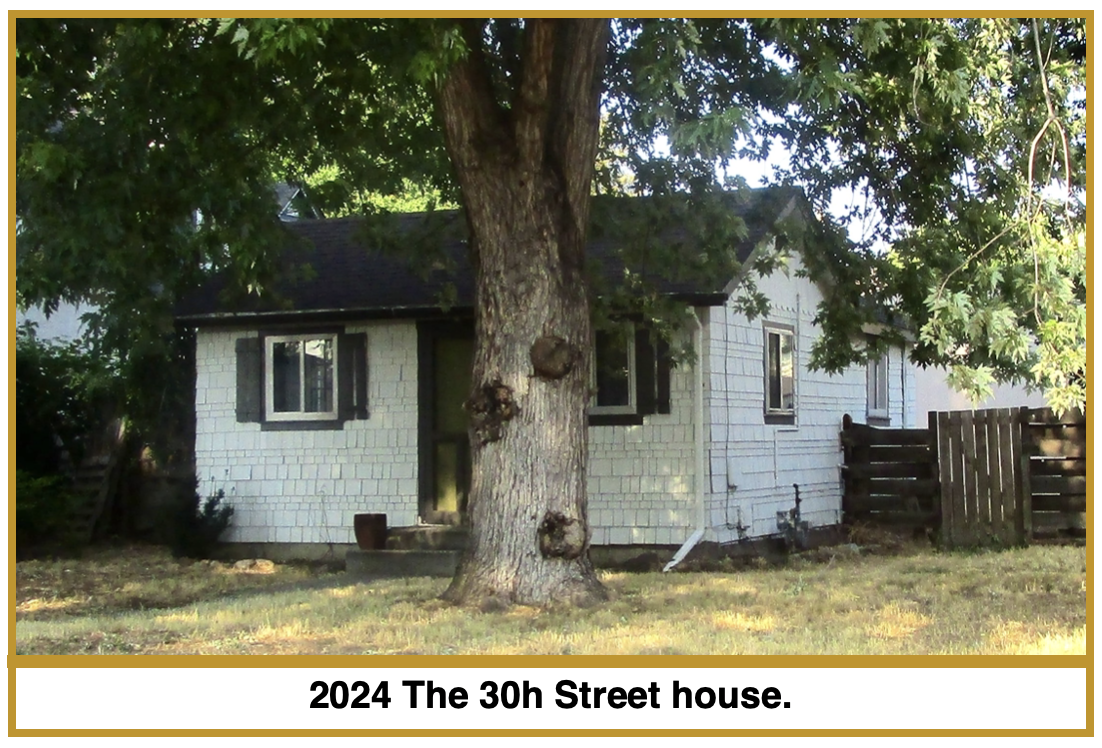
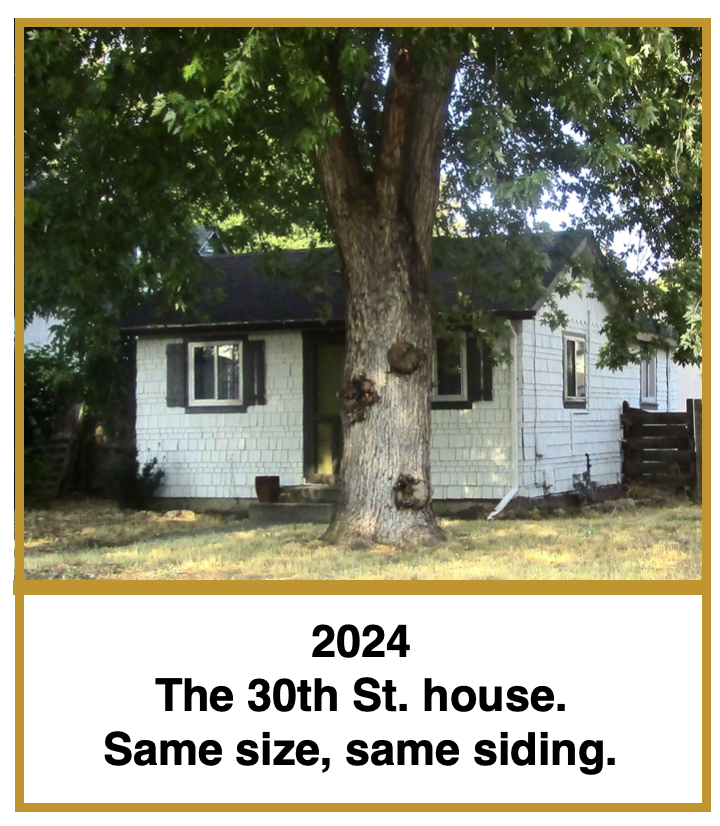
I was born when my folks lived in a tiny one bedroom house on 30th Street in Boise. It still stands a block north of the baseball backstop of Lowell Grade School. My folks had build the house in the early 1940s when WWII was introducing rationing and finding materials was getting more difficult by the day. 

Dad bought a four-wheel John Deere trailer that featured articulated front tires that turned into corners. It also boasted all-wheel breaks that used a sliding feature on the tongue to sense when the weight of the trailer was pushing on the that was towing it. As the trailer pushed against the towing vehicle the harder the tongue pulled on wires that applied the brakes.  A few years later he bought a second one.

Screenshot

Some fifty years later I piled one of those trailers piled high with firewood and was stunned as I pulling that large load over the Lucy Peak grade to Idaho City. The brakes were so smooth I forgot there was a load behind me — until every time I wanted to check out the rear view mirror and saw only the  front end of a large trailer!

My dad bought that trailer with the turning wheels and all-wheel brakes so he could drive to the sawmill in Horseshoe Bend and enjoy wholesale prices on the lumber to build our little house. Anyone remembering the precipitous and winding 1940s Horseshoe Bend Grade knows how important those steerable wheels and brakes figured into putting a roof over our heads. 

It wasn’t long before one and then another neighbor came knocking on our door asking if they could rent that trailer. When folks from across town started showing up wanting to rent it my folks looked into renting a vacant lot across the alley so they could park more trailers that served different needs, like hauling a couple of cows or a load of coal. Worbois Rentals was launched before it had a letterhead. 

Or at least I think it was. Being an infant at the time my memory is rather blurry on the details.

My Folks #13: The Smell Test

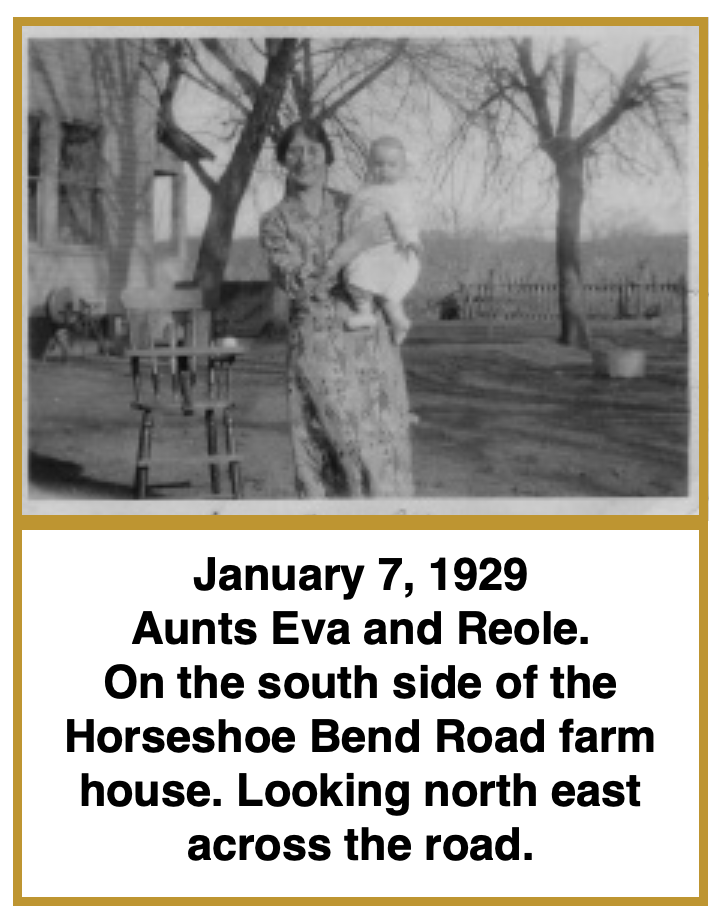
My dad’s plan on marrying my mother was the same it had been with his first wife — to move in with his folks at the farmhouse out on Horseshoe Bend Road. 

It was a large two-level house with the latest in modern counter-balanced windows that offered good circulation in the summer months. It also featured an outhouse, chicken coop, hay barn and milking shed, all of which guaranteed a rich “bouquet” that permeated the entire premises. In that department I’m sure it was no different than any barnyard. 

Years later my mother assured me she was having nothing to do with that plan: “He was not moveing me into that smelly old house to take care of his mother and aging brother and sister.” 

And he didn’t!

Instead they rented a small place in Boise until they bought a single lot on 30th Street. It was and remains at one block north of Lowell Grade School’s baseball backstop.  

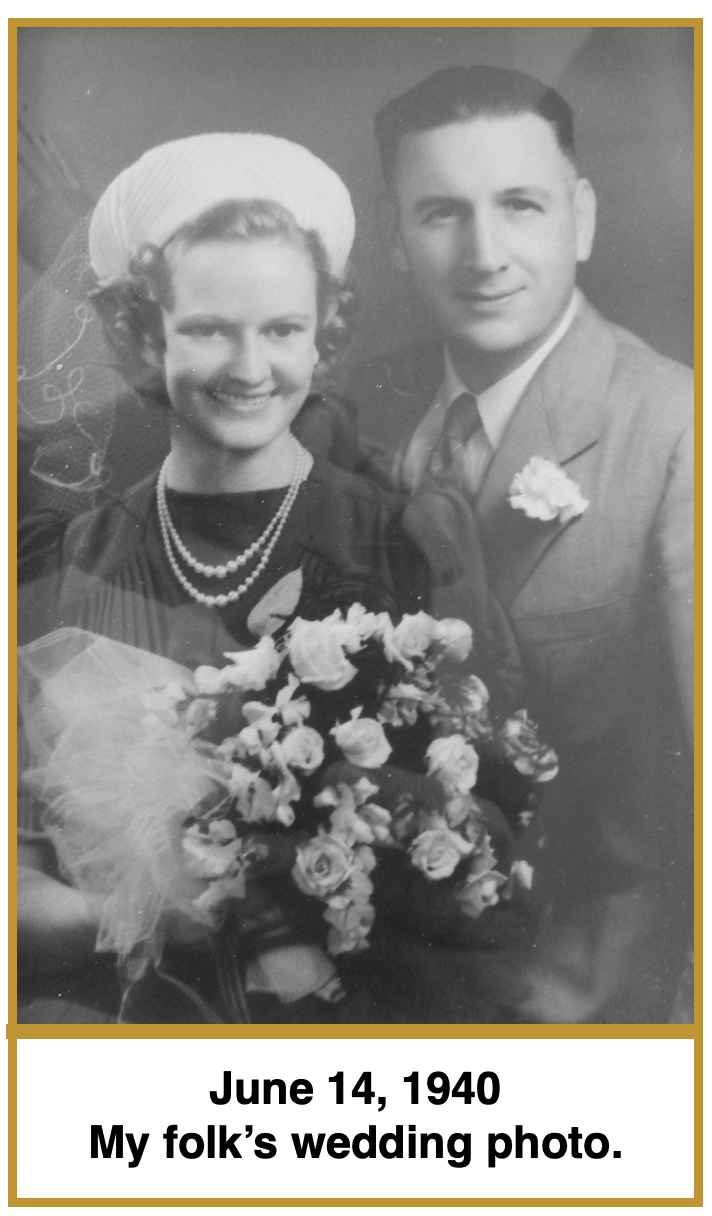
Soon they were building a small one-bedroom house. Three years after their wedding on June 14, 1940, my older sister joined the few pieces of furniture that were crowding that space. I joined them two years after that. 

My Folks #11: Birthing This Boy

I don’t remember the day, but my Mother sure did. April 25, 1945. Five days before Hitler murdered his newly married bride and then shot himself. At 6:25 in the morning, despite Mom’s hard work and interminable efforts, my fat head just would not get beyond crowning. 

Finally the doctors decided to take drastic measures by placing a contraption with three suction cups on what was showing of my head and yanking all 9 pounds and 5 ounces of me from her body.

Babies skulls are soft, an essential part of our getting through the birth channel. It is why the three suction cups that pulled me out left three very prominent black and blue lumps crowning the fat glory of me.

Somehow, after all that, my beautiful mother generously still loved me!

Years later Mom told me how excited Dad had been, running along the line of new dads looking through a viewing glass to see their newborns for the first time. Cigars were passed out and lit up as he made sure everyone looked where he was pointing while he exclaimed: “That’s my boy! That’s my boy!”

It was then Mom looked at me and confided, “But Dean — you were the UGLIEST baby I had ever seen!” 

Gosh. Thanks, Mom!

My Folks #8 – Making Hay

Cleaning out the hay wagons was one of the earliest chores I remember helping my older sister with. This happened after the large, four-wheeled trailers had had their wooden sides attached and had been rented out for something called a “hayride.”  

Later I’d come to understand the allure of these evening rides to a country picnic and bonfire and an even later and much more quiet ride snuggled in the hay on the ride home. At the time I only knew to be careful with the pitch fork, which was longer than I was tall, while climbing over what to me were the towering sides of the trailers. 

My sister made sure I would give the forkful of dry straw a good shake before tossing it over the side of the wagon. The goal was to toss the straw with enough gumption so it landed in the property’s barrow pit instead of right next to the trailer.

Dad, and later we kids, would always push the wagon next to a borrow pit before cleaning it out. Later, when conditions were right, Dad would burn the straw, cleaned the pit while ridding ourselves of the leftovers of satisfied customers.

And just why had my sister made sure I gave the pitchfork full of straw a good shake before tossing it over the side of the trailer? Now that you’ve asked, I’ll tell you the anticipated joy we kids felt when someone had rented the trailer for a “hayride.”

It seems there were folks on those hayrides who did not pay attention to what was in their pockets. As I said, I would eventually learn about those distractions. But when we were armed with pitchforks we kids discovered there was always some change falling out of that straw—sometimes even a whole dollar’s worth!

Our folks never had to coax us into cleaning up after someone else’s hayride.

My Folks #7 – Breaking Hay

My folk’s rental business included two large hay wagons. Because they were four-wheeled trailers the front tires were articulated, so they turned as the tongue of the trailers were pulled into a turn. First by hand-pushing the trailers with my sisters and later by backing them with a tractor or car I got quite proficient at the reverse- of a reverse- steering it takes to maneuver eight wheels, with four of them able to turn, into a parking space.

To my boyhood mind another fascination with these trailers was the wire that came from each wheel. Each wire attached to a cable that ran along the center post of the trailers’ undercarriage to the tongue of the trailer. On the tongue of the trailer this cable was anchored to a second part of the tongue that slid an inch or so back and forth over the section of tongue that was attached to the trailer’s undercarriage. This second part of the tongue attached to the vehicle pulling the trailer.

Dad told me these wires and the sliding tongue controlled brakes for the hay wagons. Even after helping dad replace the break shoes I never really believed those flimsy wires and little bit of a sliding tongue would make any difference in controlling a trailer.

My dad died in 1977, when I was 32, and that summer we were getting the property ready for an estate auction. Among other collections were five large stacks of wood. My dad always liked big roaring fires in our home’s brick fireplace and our cabin’s cast iron Franklin stove, so he had plenty of justification for an ever expanding accumulation of wood. Previous woodpiles had made great forts when we were kids. 

In 1977 I had no fantasy of cutting all that wood and moving it to the mountain cabin but there were two randomly piled mounds that had already been cut down to the sizes that were useful at the cabin. It seemed practical and an honer to Dad to load up one of our big hay wagons and get a last load of wood to the cabin, so I recruited my friend Andy Venn to help out. 

We attached one trailer’s high sides around the flat bed of the wagon and began pitching in chunks of wood. I don’t remember it taking long at all on a pleasant spring day. Getting in the trailer, tossing them down and stacking them beside the cabin’s porch was just as rewarding.

The thing I remember being completely surprised by was the trailer’s breaks. I expected the big V-8 engine of my 1962 Mercury Monterey to pull the grade from Lucky Peak Dam to Highland Valley Summit, a climb of 922 feet in 4.4 miles. No problem there. It was the even steeper grade down to the Mores Creek Bridge, 527 feet in 2.6 miles, that I had been dreading. All that weight pushing against the car, and all that weight pushing the trailer to the side and around the brakes of the car if the tongue were ever so slightly out of true was a disaster in the making. It worried my mind.

It turned out I would never have known that trailer was following me down that hill if I had not attached the tongue to the car myself — and, of course, if I had been able to see anything but a wall of trailer in my rear view mirror. There was never the least bit of the trailer pushing on the car. Nor were there any lunges back and forth because the brakes were setting too strong, holding the trailer back until the car pulled the brakes off and the trailer ran forward pushing the tongue of the trailer into the car. Rather, that steep descent was as smooth as pulling a trailer on a level road.

Hay wagons get heavy, dear reader. Whether loaded with alfalfa, furniture, kids on a hay ride or stacks of wood. I had never thought about the need to break heavy trailers. Nor had I appreciated the clever and perfectly adept way those old timers had mechanically solved a serious problem.